
The Seasonally Inspired Scents of PepperHarrow Candles
With summer evenings quickly ending, and fall evenings just around the corner, now is the perfect time to refresh your candle collection! Our popular summer candles are bursting with scents like citrus, baked lemon goods, watermelon margs, and of course lavender goodness, all handcrafted to keep you in the summer spirit year long. Here’s a rundown of what’s in right now, and what might be on its way soon!
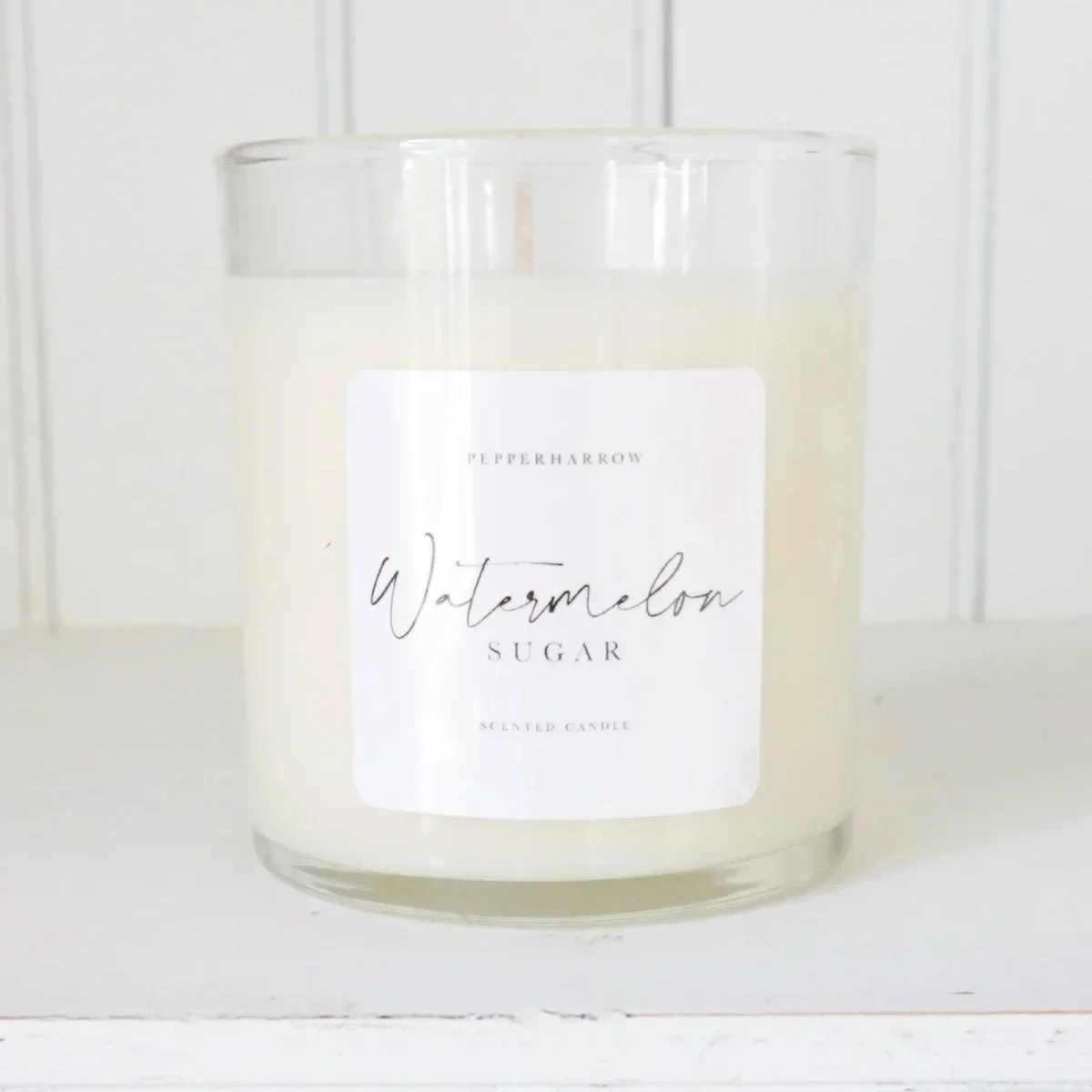
Watermelon Sugar
Our Watermelon Sugar Candle is the perfect fragrance to celebrate the joys of summer! This candle is invigorating and refreshing with its juicy watermelon and hint of sweet sugar, and creates an atmosphere that’s both uplifting and calming. Watermelon Sugar will fill your space with a blend of fruity freshness and subtle sweetness, perfect for any summer gathering, afternoons on the porch, or simply bringing a touch of sunshine indoors.
Lemon Crème
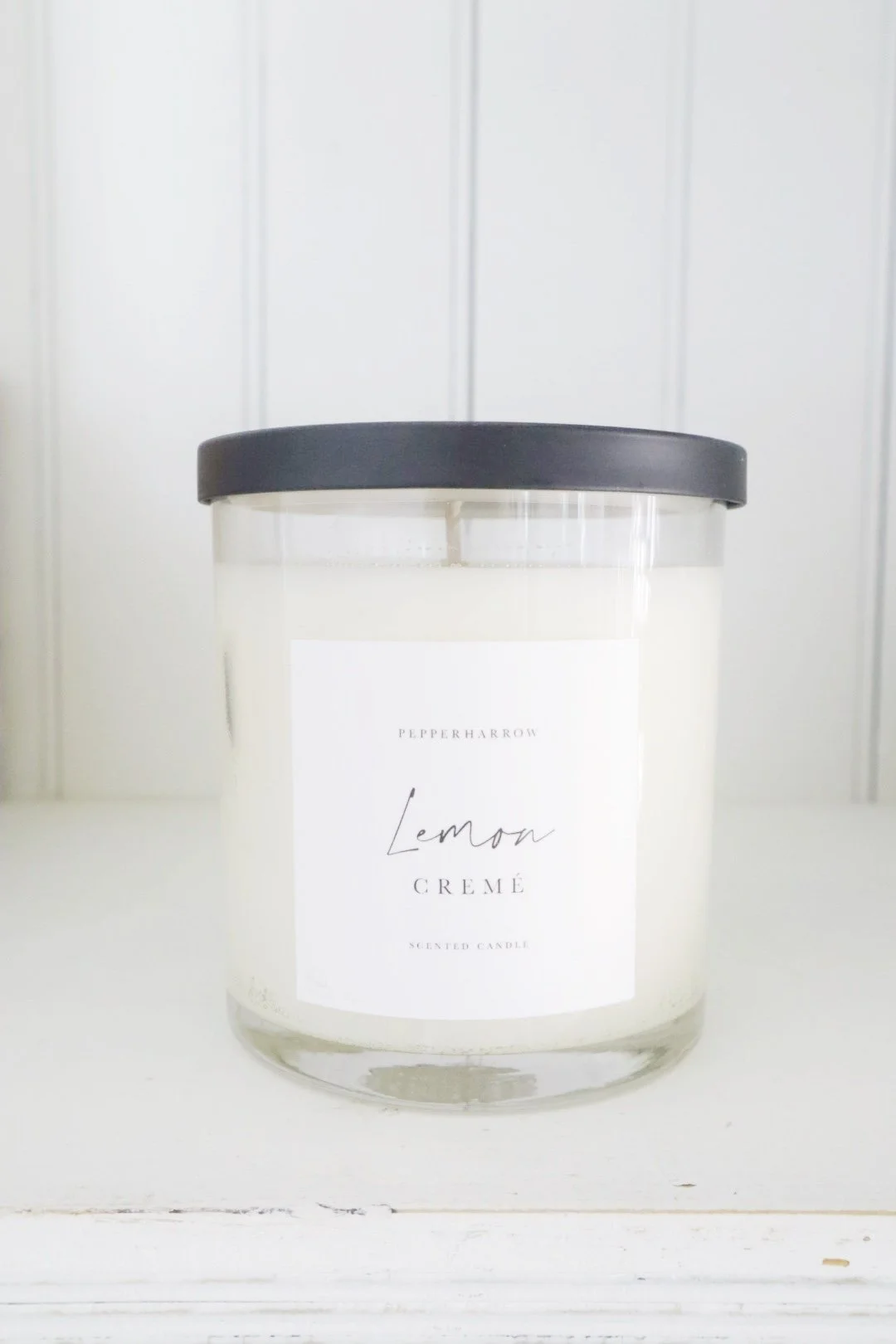
Bright, creamy, and irresistibly smooth, our Lemon Crème candle is a fresh twist on a citrus classic. The uplifting zest of lemon is softened with sweet cream and hints of velvety vanilla, creating a fragrance that feels both refreshing and indulgent.
As it burns, the scent brings to mind a sunlit patisserie filled with lemon custards and delicate confections. Hand-poured on the farm with premium soy wax and a natural cotton wick, it offers a clean, even burn and a warm glow that adds a little sunshine and sweetness to any room.
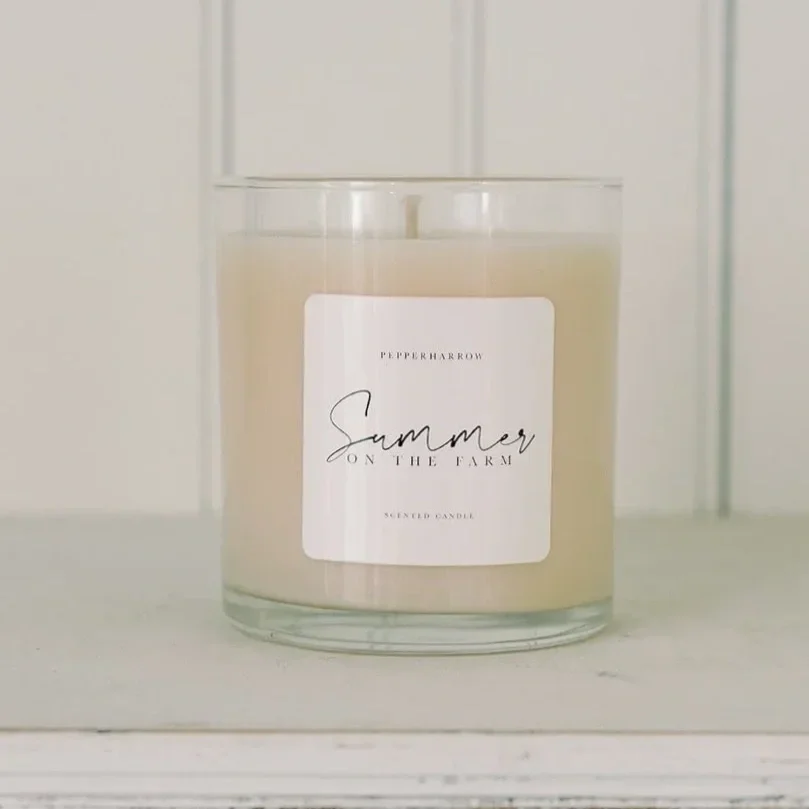
Summer on The Farm
Summer on the Farm is another best-seller known for its mint and clementine fragrance that easily transports you to a summer’s day in the countryside. As you light this candle, the harmonious blend of these two fragrances will create an ambiance that is both energizing and calming, evoking memories of leisurely strolls through a lush farm garden under the warm sun. Whether you're seeking a moment of relaxation, an invigorating burst of freshness, or simply a touch of nature's charm, this candle is the perfect choice for you.
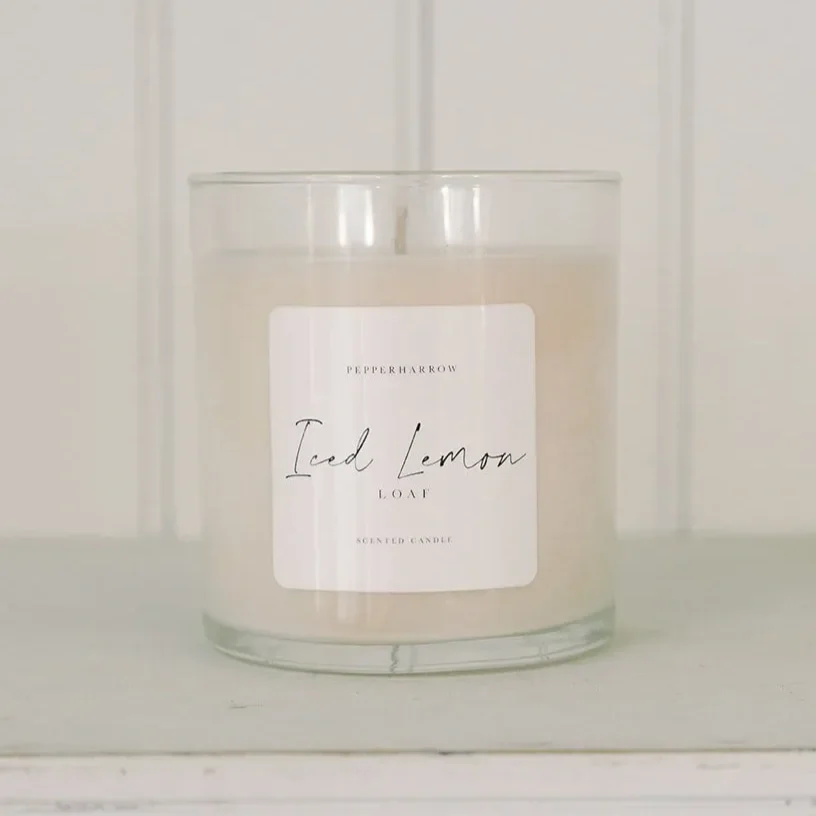
Iced Lemon Loaf
Our yummy Iced Lemon Loaf Candle is a treat for your senses with its zesty lemon and buttery cake base. When you light this candle, the air fills with the comforting scent of lemon-infused batter and easily transports you to a bustling bakery on a sunny morning.
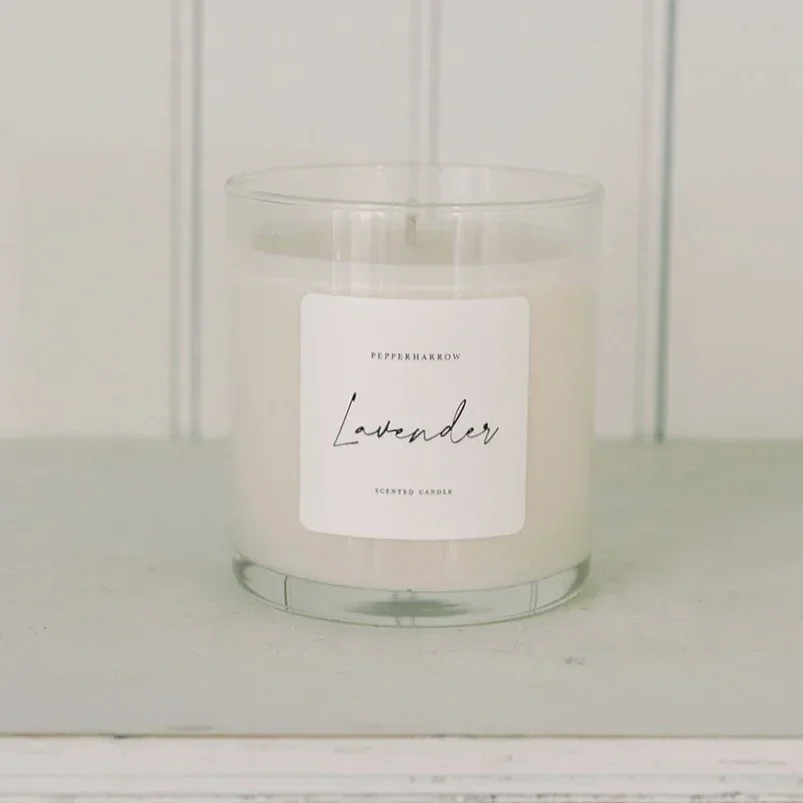
Lavender
Of course, you can’t go wrong with our classic Lavender Candle. This candle is hand-poured using our lavender essential oil which will gently float through your home every time it’s lit. Lavender has wonderful aromatherapy properties like stress relief and relaxation which makes it perfect for a cozy night in or a much-needed moment of calm, leaving both you and your space feeling refreshed.
Cinnamon Chai
Our Cinnamon Chai Candle is a sensory delight that brings warmth and comfort to your home. This stunning candle captures the aromatic essence of spiced chai tea infused with a hint of cinnamon, creating a cozy and inviting atmosphere. It’s the perfect candle for the transition from summer nights to fall evenings.
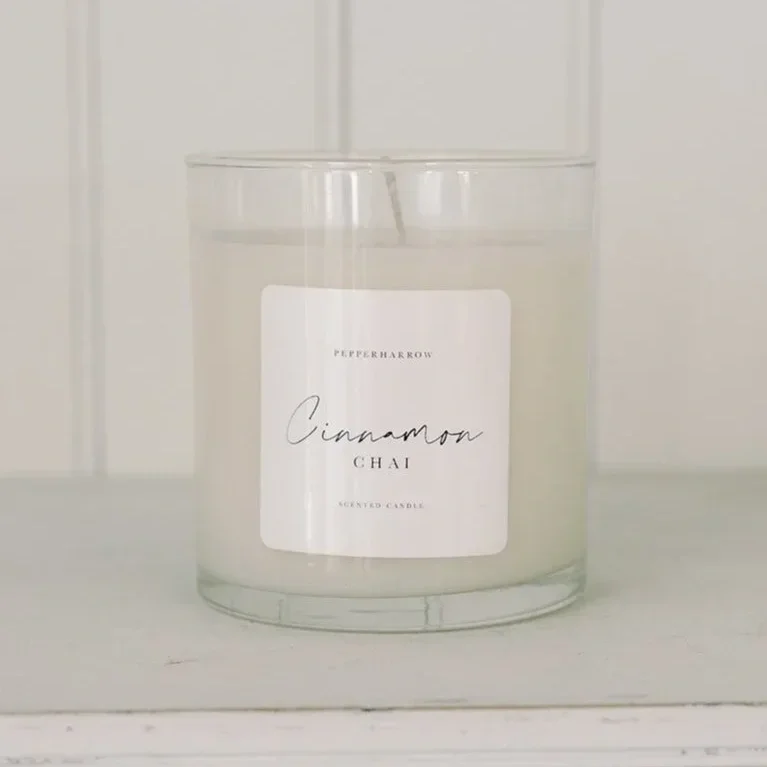
Our candles are all hand poured with high quality, natural soy wax, ensuring a clean and even burn that lasts for hours. The natural cotton wick adds a touch of coziness to your space. They all come in a pretty 8.5oz glass container, with a few select fragrances available in a 16oz size.
Stay tuned for even more summer vibes as we get ready to drop a few new candle scents for y’all soon. But for now, take in the rest of the summer days and let our candles be a stunning addition to your space.
XX Jenn and Adam
How to Grow Lavender in Iowa
Lavender isn't supposed to thrive in Iowa's clay soil and brutal winters, but we've been growing it for over a decade. Here's what every Iowa gardener should know before putting a single plant in the ground.
Growing lavender in Iowa sounds like it shouldn't work. The soil is too rich. The winters plunge well below zero. The summers swing between intense heat and suffocating humidity. And yet, here at PepperHarrow Farm in Winterset, we've been growing lavender successfully for over a decade in Zone 5b, central Iowa, cultivated over 18,000 plants across more than 14 acres. It took years of trial, error, and many painful losses to learn what this climate demands. We won't pretend we can fit a decade of hard-won knowledge into a single blog post, but we can share the foundational lessons that every Iowa gardener should understand before putting a single plant in the ground.

Why Lavender Struggles in Iowa (and Why It Can Still Thrive)
Lavender is native to the Mediterranean coast, where summers are hot and dry, winters are mild, and the rocky, alkaline soil drains fast. Iowa offers almost the opposite on paper. Our clay soils retain water like a sponge. Our winters regularly dip to negative temperatures and our summers can feel like a steam room from late June through August.
Here is the most important thing we can tell you: the number one killer of lavender in Iowa is not cold. It's moisture. Specifically, it's moisture trapped around the roots during winter freeze-thaw cycles. When the soil stays wet and temperatures bounce above and below freezing, the crown and roots rot. That single fact should shape every growing decision you make.
The good news is that Iowa does get reliable sun, and with the right variety selection, soil preparation, and winter care, lavender can absolutely thrive here. We've watched plants survive stretches of negative 15 degrees on our farm when the fundamentals were in place.

Spring Lavender
Our lavender usually starts to ‘wake up’ around mid May, sending out green shoots, or growing back from the base of the plant.
Choosing the Right Varieties: Not All Lavender Is Created Equal
Variety selection is where many Iowa growers fail before they even start. Walk into a big box store in May and you'll find gorgeous French and Spanish lavender on the shelf. They look incredible. They will also be dead by February. Those varieties are only hardy to Zone 8 and simply cannot survive our winters outdoors.
What does work in Iowa? English lavender (Lavandula angustifolia) and select hybrid cultivars (Lavandula x intermedia) are your foundation. Within those species, specific cultivars matter. Some handle our humidity better than others. Some hold up to our freeze-thaw cycles more reliably. Some produce better blooms in our shorter growing window.
We've tested dozens of cultivars over the years on our farm. A few names to start your research: Munstead and Hidcote are widely recognized as cold hardy performers, and Phenomenal has earned a strong reputation for disease resistance in humid climates. But knowing which variety to buy is only the beginning. How you plant it, where you place it, and how you prepare your soil will determine whether it actually survives.
We cover variety selection and placement strategy in depth in our online Lavender Masterclass, where you can see how each cultivar performs in real Iowa growing conditions, side by side, in our fields.
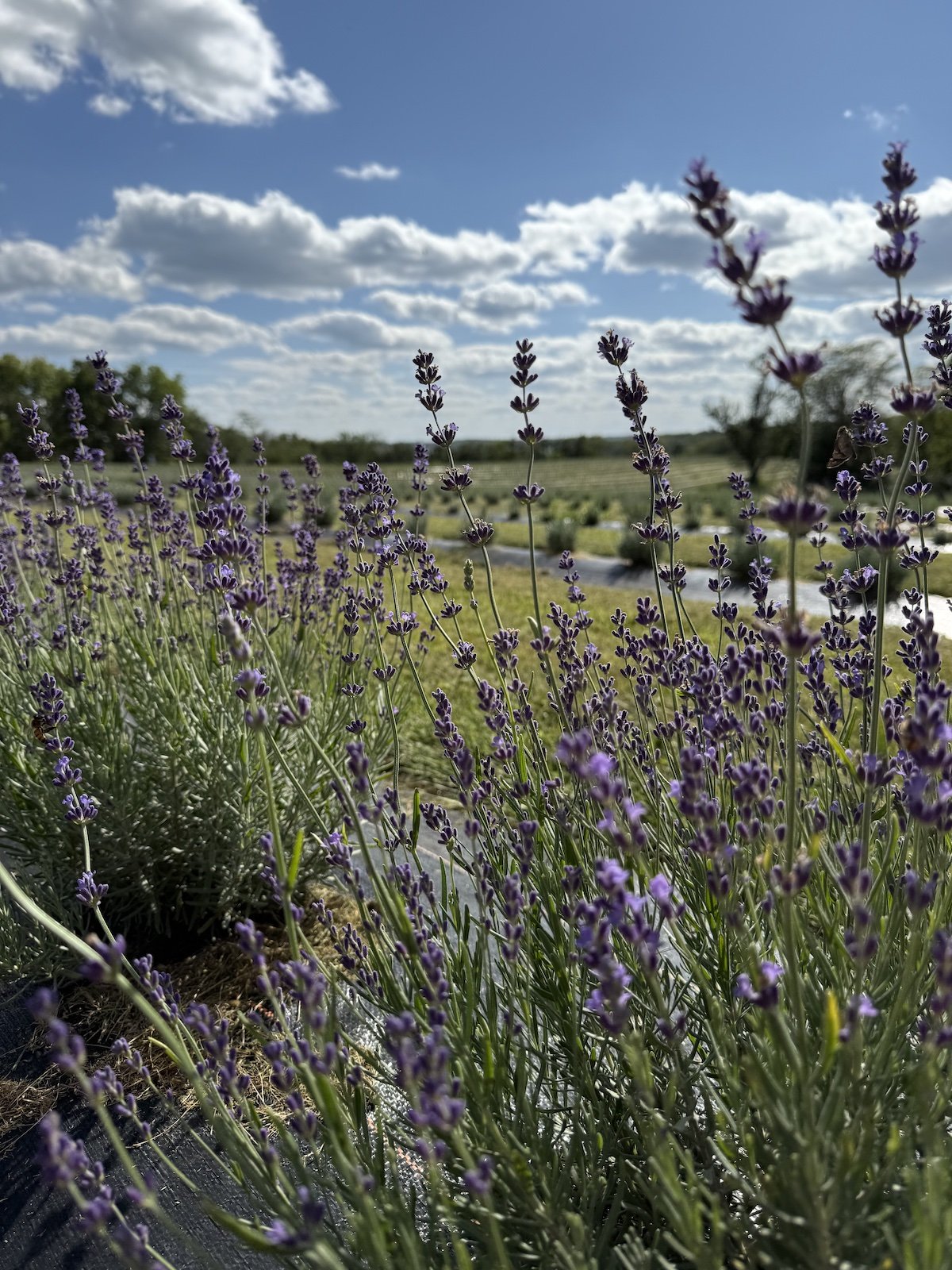
Lavender Varieties
We grow over size different varieties of Lavender and continually experiment with new varieties. Hidcote is the variety shown here. A very reliable lavender for growing in Iowa.
The Challenge Every Iowa Grower Must Solve-The Soil
If you take one thing away from this post, let it be this: drainage is everything. Lavender roots sitting in wet soil will rot, and Iowa's heavy clay makes that a constant threat.
The principle is straightforward. Lavender wants soil that drains fast, stays on the lean side nutritionally, and trends slightly alkaline (a pH between 6.5 and 8.0). Iowa's native clay soil does none of those things naturally. That means you need to actively engineer your planting environment. You're not just digging a hole and dropping in a plant, you're building a micro-habitat.
There are several approaches to solving this, from amending in place to building raised beds to installing gravel underlayers. Each has tradeoffs depending on your scale, your existing soil composition, and your budget. What we'll say is this: don't underestimate this step, and don't skip soil testing. Many gardeners invest in beautiful plants and then lose them because they treated soil prep as an afterthought.
The specific soil amendment ratios and bed construction methods we use at PepperHarrow are techniques we've refined over many growing seasons. We share our full approach in our online lavender growing course.

Planting, Timing and Spacing
Two principles to keep in mind for Iowa:
Plant in late spring. In central Iowa, that typically means mid-May after the last frost risk has passed. Planting too early, when spring weather is still swinging between 70 and 30 degree days, stresses young plants and invites root rot before they've established.
On the otherhand, don’t plant too late. We recommend planting not any later than July 1st. Beyond that time, you risk losing your plants over the winter. They need plenty of time to establish before the harsh, cold weather sets in.
Give your plants room to breathe. This is one of the most common mistakes we see. It's tempting to plant close together for a fuller look right away, but in Iowa's humid summers, air circulation is your best defense against fungal disease. Crowded plants trap moisture in the canopy, and moisture is the enemy. We space our plants generously. The specific spacing depends on the cultivar and the layout, but we like to keep an average of two feet per plant.

Lavender Self-Care Products
All of the lavender we harvest from our fields is distilled by hand, right at the farm. The harvested lavender buds are steam-distilled into essential oil, and used to make natural beauty and self-care products, such as our popular lavender body oil.
Seasonal Care - The Approach for the Midwest
Caring for lavender in Iowa is not the same as caring for it in Oregon or Provence. Our climate demands a different strategy.
A few principles that guide our seasonal approach:
Water less than you think. Overwatering is far more dangerous than underwatering for lavender in Iowa. Once plants are established, they are remarkably drought tolerant. If the leaves start yellowing, that's almost always a sign of too much moisture, not too little.
Feed sparingly. Lavender prefers lean, nutrient-poor soil. Rich Iowa garden soil and heavy fertilizer programs actually work against you here, encouraging soft growth that's more vulnerable to winter damage.
Summer humidity is your toughest season. July and August in central Iowa test every lavender plant. Good airflow, proper spacing, and your approach to mulching all play a role in getting through these months. This is where your soil prep and variety selection either pay off or catch up with you.
The nuances of our seasonal care calendar, from exactly when we shift watering patterns to how we manage mulch through Iowa's unpredictable shoulder seasons, are topics we go deep on during our farm workshops. There's a rhythm to it that's easier to show than to write about.
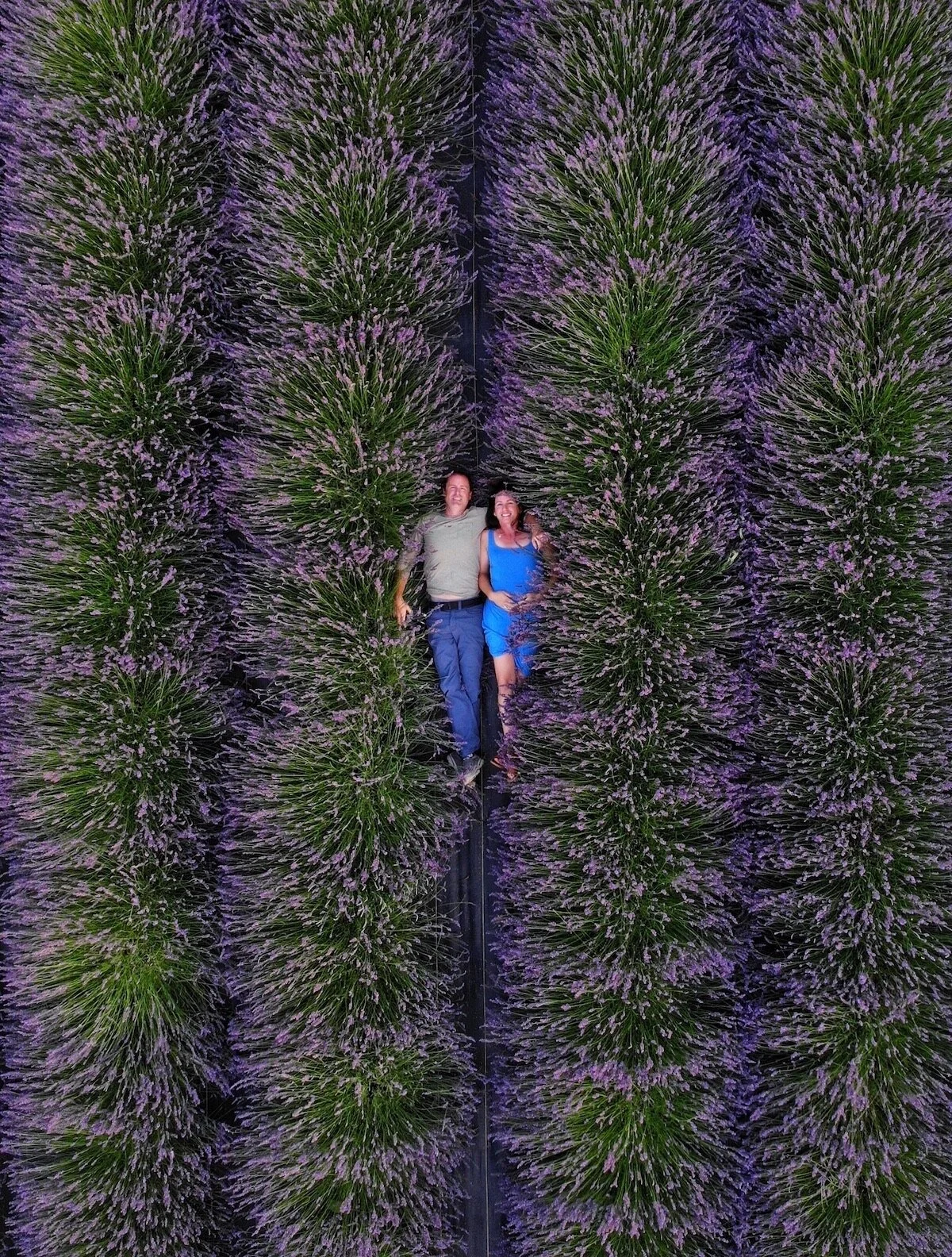
Winterizing: Where Most Iowa Growers Lose Their Plants
Winter care is the make-or-break season for Iowa lavender. Get this wrong and everything else you did right won't matter.
The key principles:
Do not prune in fall. This is critical. Fall pruning encourages tender new growth that will be killed by winter cold. Save all pruning for spring. We know it's tempting to tidy things up in October. Resist that urge.
Dry conditions going into winter matter more than you realize. As plants go dormant, they need to be dry. The combination of wet soil and freezing temperatures is what causes root rot and crown damage.

Lavender Field at PepperHarrow
Snow is your friend. A consistent blanket of snow is actually one of the best natural insulators.
We've lost plants to winter. Every lavender grower in Iowa has. The difference between occasional losses and losing entire plantings comes down to a winterization approach tuned to your specific site conditions. It took us several seasons to dial in our method. In our workshops and online course, we walk through the full winterization process step by step, including the adjustments we've made after especially brutal winters.
Pruning Lavender Plants
Proper pruning is one of the most underrated skills in lavender growing. Done well, it keeps plants productive and healthy for many years. Done poorly (or not at all), plants become woody, leggy, and stop flowering.
The golden rules: prune in spring (not fall), never cut into old bare wood (it won't regenerate), and shape for airflow. The timing, angle, and extent of each cut matter, and they vary by cultivar and plant age. This is honestly one of those skills that's best learned hands-on, which is why we include live pruning demonstrations in our spring workshops.
Harvesting Lavender

Bundle of Harvested Lavender
Most English lavender varieties will begin blooming in mid-June in central Iowa, with peak harvest in late June through early July. The timing of your cut affects the fragrance, oil content, color retention, and vase life of the stems. We harvest thousands of stems each season for our handmade products, dried arrangements, and farm shop, and the precision of that timing is something we've fine-tuned over many harvests.
If you're growing at home, a good starting point: harvest when buds are showing color but before they fully open. That's when the essential oil concentration tends to be highest. Cut stems long, bundle them, and hang them upside down in a dark space with good airflow.
Come See What's Possible
If you'd like to see thriving lavender in Iowa with your own eyes, we'd love to welcome you to PepperHarrow Farm in Winterset for our annual Lavender Festival. Our 60-acre farm in Madison County is home to over 18,000 lavender plants, acres of seasonal cut flowers, a bespoke farm shop full of handmade lavender products, and experiences ranging from floral workshops to al fresco style farm dinners to glamping stays.
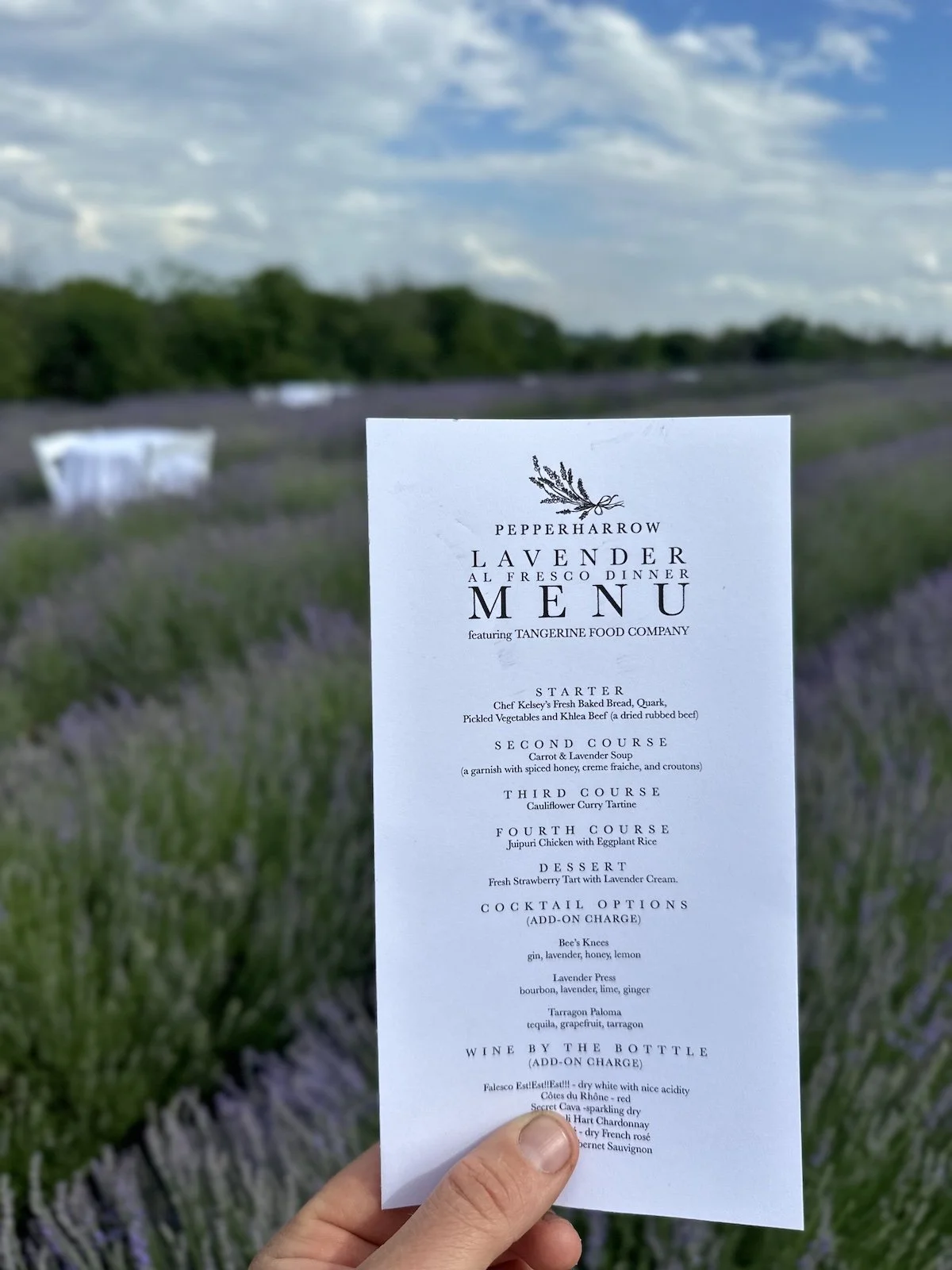
Lavender Al Fresco Dinner
Guests love to visit the farm to see the lavender in bloom, especially when it’s paired with excellent food and a truly unique experience. The Lavender Al Fresco Dinner is held once a year at the farm, typically in mid-June when the lavender reaches its peak bloom and the fields are at their most fragrant and picturesque.
For those who want to go deeper:
Our on-farm lavender workshops cover variety selection, soil preparation, planting technique, seasonal care, winterization, pruning, and harvesting with hands-on instruction in our fields. View upcoming workshops
Our online lavender growing course brings that knowledge to growers who can't visit in person, with detailed lessons drawn from over a decade of growing in Iowa's challenging conditions. Learn more
Our Bloom Membership keeps you connected to the farm throughout the growing season, with bouquet pickups, behind-the-scenes access, and early invitations to events and limited releases. Explore membership
We also sell a full line of farm-made lavender products, from salves and soaps to candles and sachets, all made with lavender grown and harvested right here in Winterset.
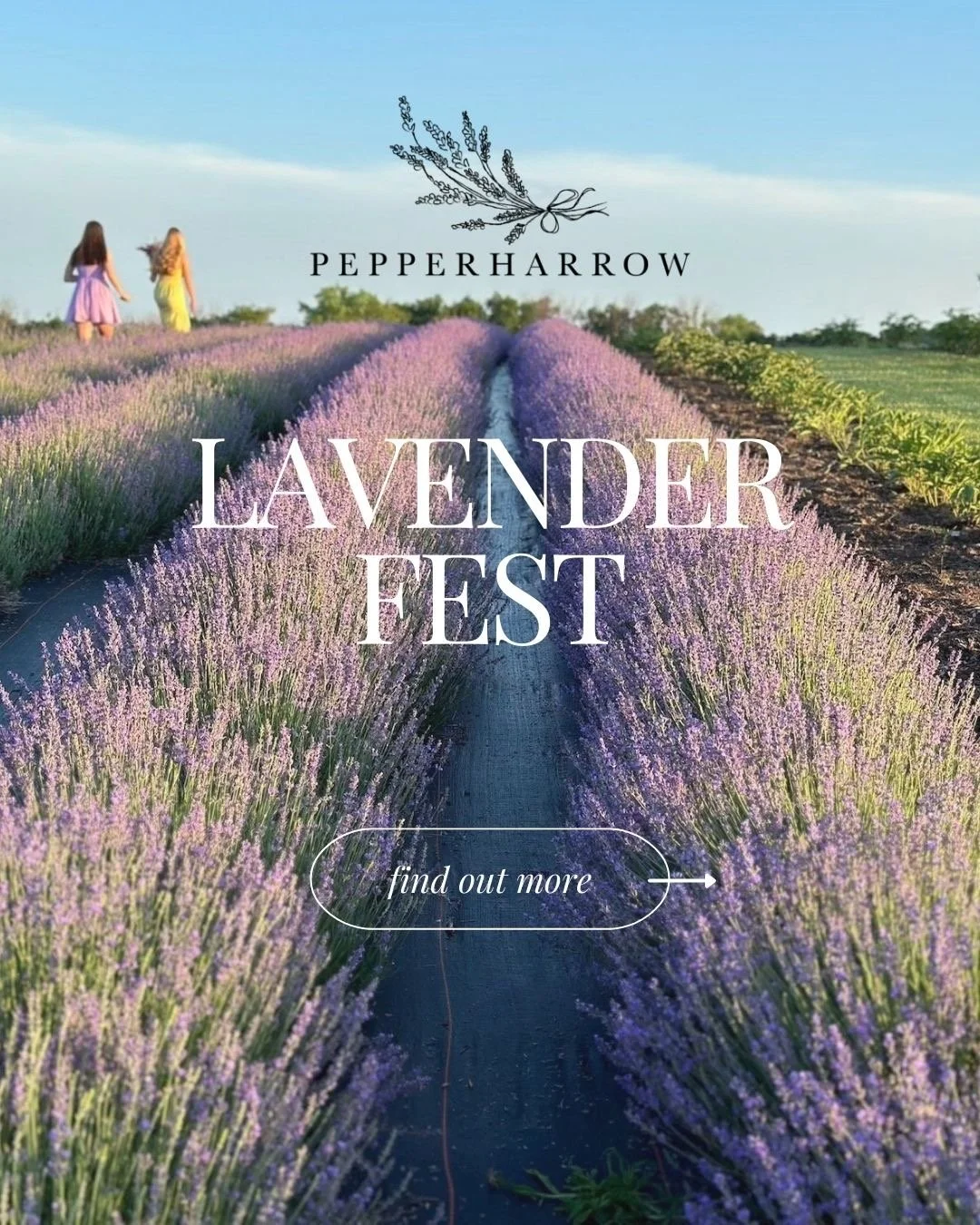
Lavender Festival
Held once each June, the Lavender Festival at PepperHarrow is a celebration of lavender in full bloom. At the height of the season, the fields turn a breathtaking shade of purple, an unforgettable sight that invites you to slow down, breathe deeply, and soak in the beauty of the farm!
Guests are invited to experience the farm in a hands-on, meaningful way. Stroll the fields, enjoy guided farm tours, and learn from live lavender demonstrations ranging from baking and culinary uses to cocktail crafting and distillation. Capture stunning photos among the blooms, then harvest your own fragrant bouquet to take home.
Growing lavender in Iowa is absolutely possible. It just takes a little patience, and a willingness to do things differently than the generic advice suggests. We hope this post gives you a few tips, and a starting point, and we'd love to help you take the next step!
XX Jenn and Adam
The Secret to Having Blooms All Season Long
One of the questions we’re asked most often, whether during farm visits or messages online, is how we manage to keep the fields blooming for such a long stretch of the season. It’s a great question, and one we love answering, because the reality is that continuous blooms are never accidental. They’re the result of a lot of planning, observation, and intentional growing that shapes nearly everything we do.
The answer is one that’s pretty simple. It’s part of our succession planting plan, where we make a seed starting and planting plan very early in the year and implement this plan to make sure we have have plenty of flowers to use for bouquets, and for visitors to enjoy seeing at the farm all throughout May through October.
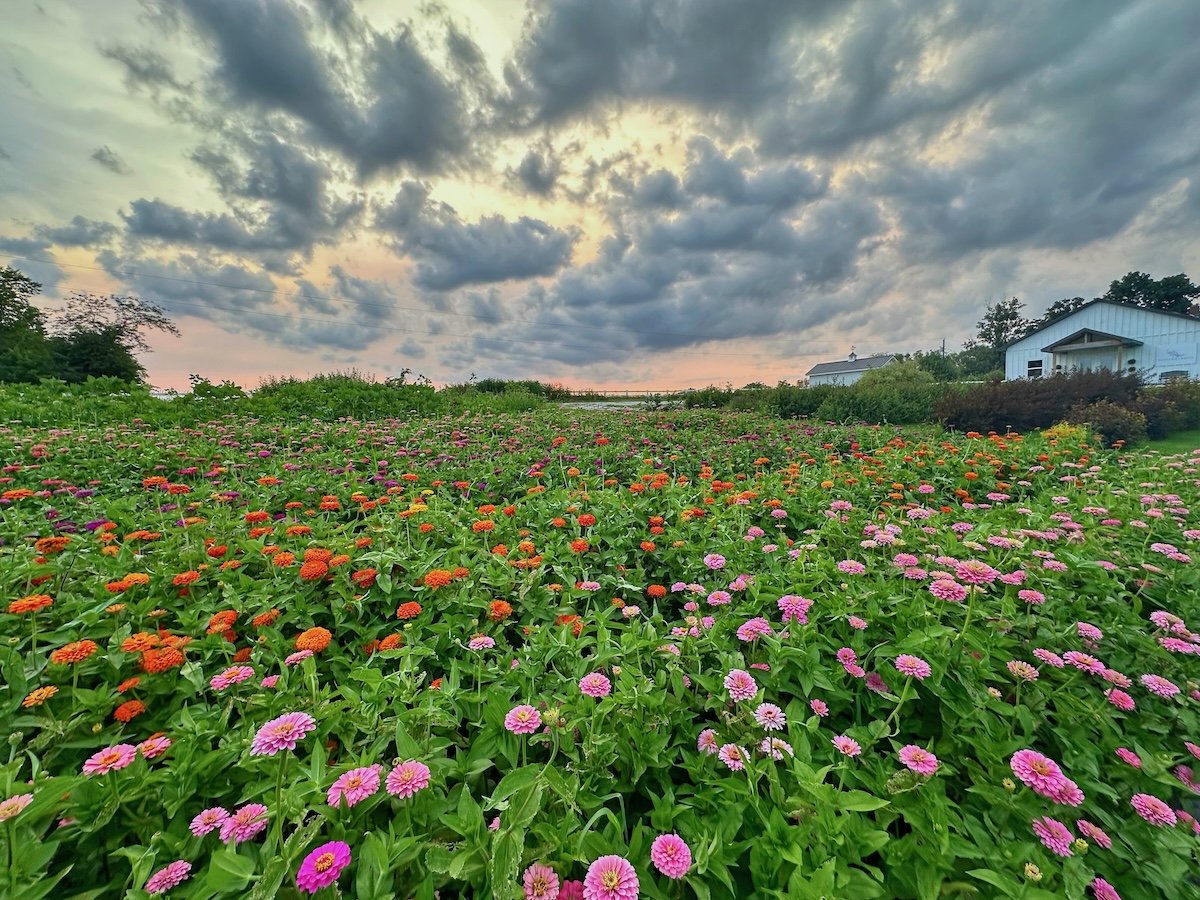
For us, succession planning serves as one of the most important parts of our flower growing season. While it may not be the most glamorous part of growing flowers, it is certainly one of the most essential. Behind every massive harvest and every field that looks like a rainbow of color, is the framework of a plan for growing and planting flowers that bloom all season long.
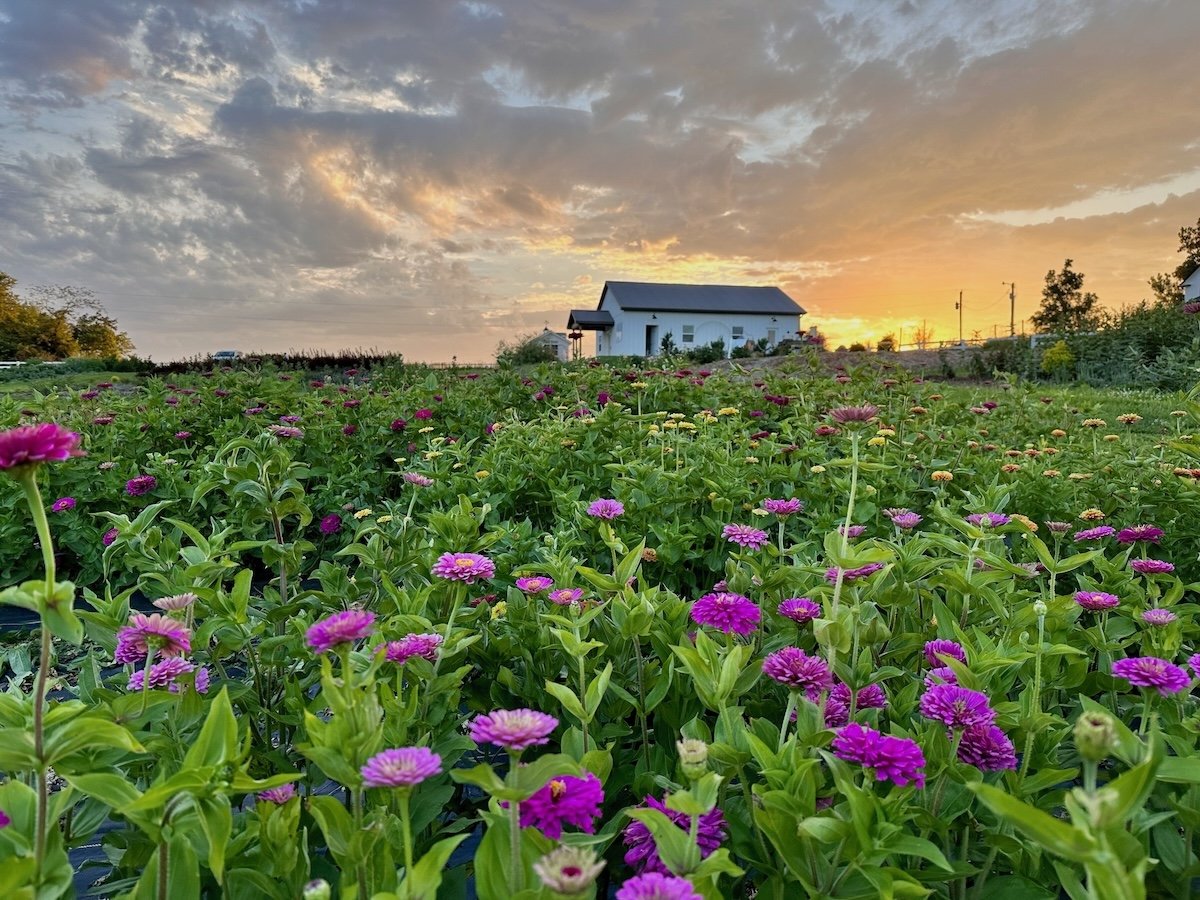
Seasonal Timing
Flowers, by their very nature, are fleeting. No single sowing, no matter how successful, can sustain an entire growing season. Early on, we learned that relying on one planting often leads to dramatic highs followed by big gaps in blooms, creating cycles of overwhelm and scarcity that can be difficult to manage a business.
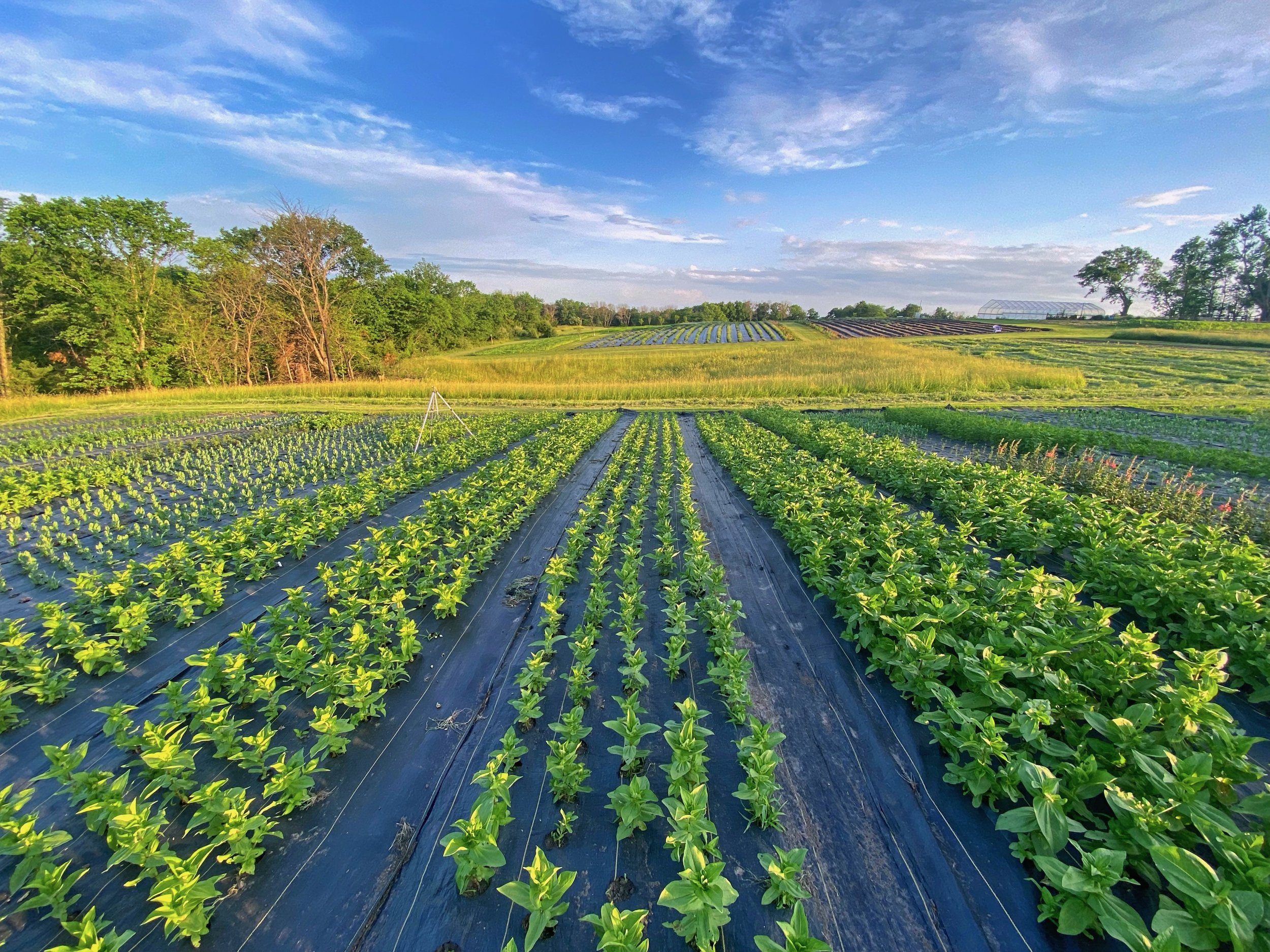
Succession planting allows us to work in harmony with this natural bloom cycle rather than constantly chasing it. By sowing and planting in thoughtfully spaced intervals, we create overlapping waves of blooms. As one succession begins to slow, another is just beginning to flourish, resulting in a season that feels continuous, and balanced.
Creating a Rhythm
Without succession planning, flower farming can quickly become reactive. A sudden flood of blooms may leave you scrambling to harvest, design, and sell, only to be followed by weeks where availability of blooms feels limited. This pattern doesn’t just affect the aesthetics of the farm, it impacts harvest consistency, sales stability, and the overall experience of growing. These are all so critical when it comes to selling flowers.
By contrast, succession planting introduces a pattern, a mapped out plan. We love this, because harvests become more predictable, design work feels less constrained by supply, and the fields maintain that full, generous look we all strive for. It’s always hard to sit down to do the planning work up front, but the benefits always pay off in the long run.
Succession planting is often simplified into a schedule of “plant every two weeks,” but the reality is it’s a little more nuanced. Each flower crop carries its own timeline, influenced by maturity rates.
True succession planning requires an understanding of these variables and a willingness to adapt. All of this is part strategy, part observation, and part experience. All skills refined gradually over seasons rather than perfected overnight.
The PepperHarrow Tagalong Succession Guide
Our Succession Planting Guide was designed to bring clarity and calm to succession planning. Built from our 15 year long flower growing experience, it offers structure for learning this process, yet gives enough flexibility for success. It’s meant to work alongside you through the season, helping you think ahead, track your plantings, and create a more seamless flow of blooms.
👉 Download the Tagalong Succession Guide
A Season of Abundance
Continuous blooms in the flower fields are often described as magical, with blooms in a rainbow of color that look like they go on and on for days, but the truth that they’re thoughtfully planned well in advance. Behind every flower field are decisions, and a lot of work made weeks and months earlier.
Regardless if you choose to check out our succession plan, we hope that you’ll explore starting seeds and planting and multiple times throughout the growing season to experiment with having blooms throughout your growing season. Once you see how many more flowers doing this provides, you’ll be hooked!
XX Jenn and Adam
The Magic of Dried Flowers at PepperHarrow
One of the fun parts of growing flowers is watching them change through the seasons. From the first pastel stems in spring to the last vibrant blooms of late summer, each variety has its moment. With every season, there’s always something to look forward to, but it’s good to remember: just because the growing season ends doesn’t mean the beauty has to.
Here at PepperHarrow, we love drying flowers to carry a bit of those gorgeous blooms with us through the colder months. There are many different ways to preserve flowers, but over the years we’ve found that simple air drying fits our ‘keep is simple’ way of doing things. Always the best plan! Air drying flowers is easy, natural, and requires very little beyond time and patience.
Why We Dry Flowers
Drying flowers allows us to expand our flower season to diversify into selling flowers when fresh flowers are no longer in bloom, during our off season. This is a great way to keep our business running during the months when fresh flowers aren’t readily available.
We use dried flowers throughout our home and studio to create interesting, creative crafts to appreciate and enjoy. They fill vases, become wreaths for the front door, and sometimes find their way into other creative projects, like installations for friends.
Mini Dried Flower Bouquets
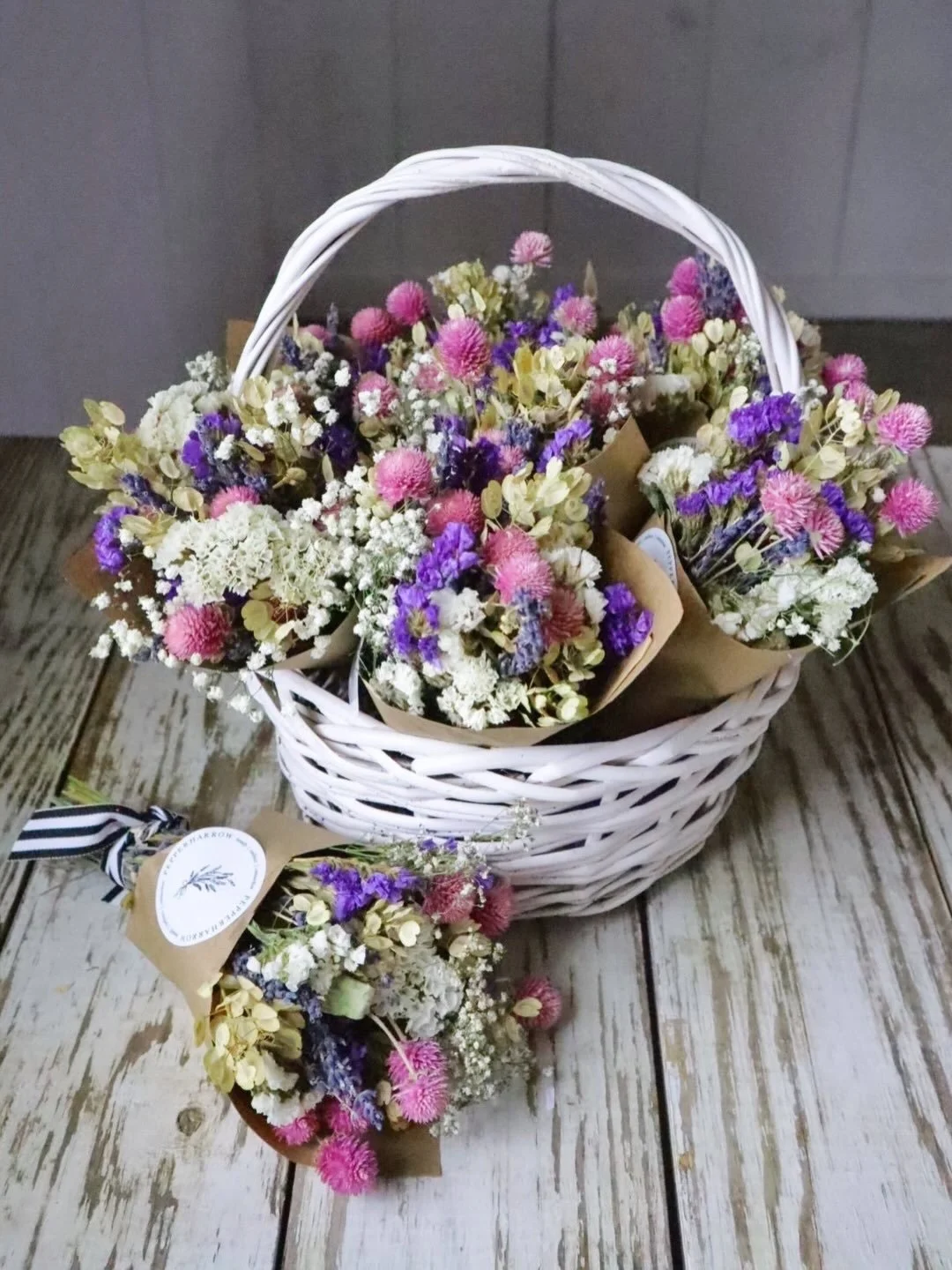
Making mini-dried flower bouquets is one of our most favorite activities during our off season. We enjoy the creative process of making beautiful new combinations to share with our customers.
Our Simple Air Drying Method
Air drying is as uncomplicated as it sounds, and that’s exactly why we love it. We’re usually too busy to be able to handle anything beyond what’s simple and straightforward, because there are always a ton of competing projects going on when we’re in the height of our growing season.
We begin by harvesting flowers when they’re at their peak bloom, where they are open and beautiful, but not overly mature. The timing matters. If you wait too long, petals may fall as they dry. If you cut too early, they may not fully open.
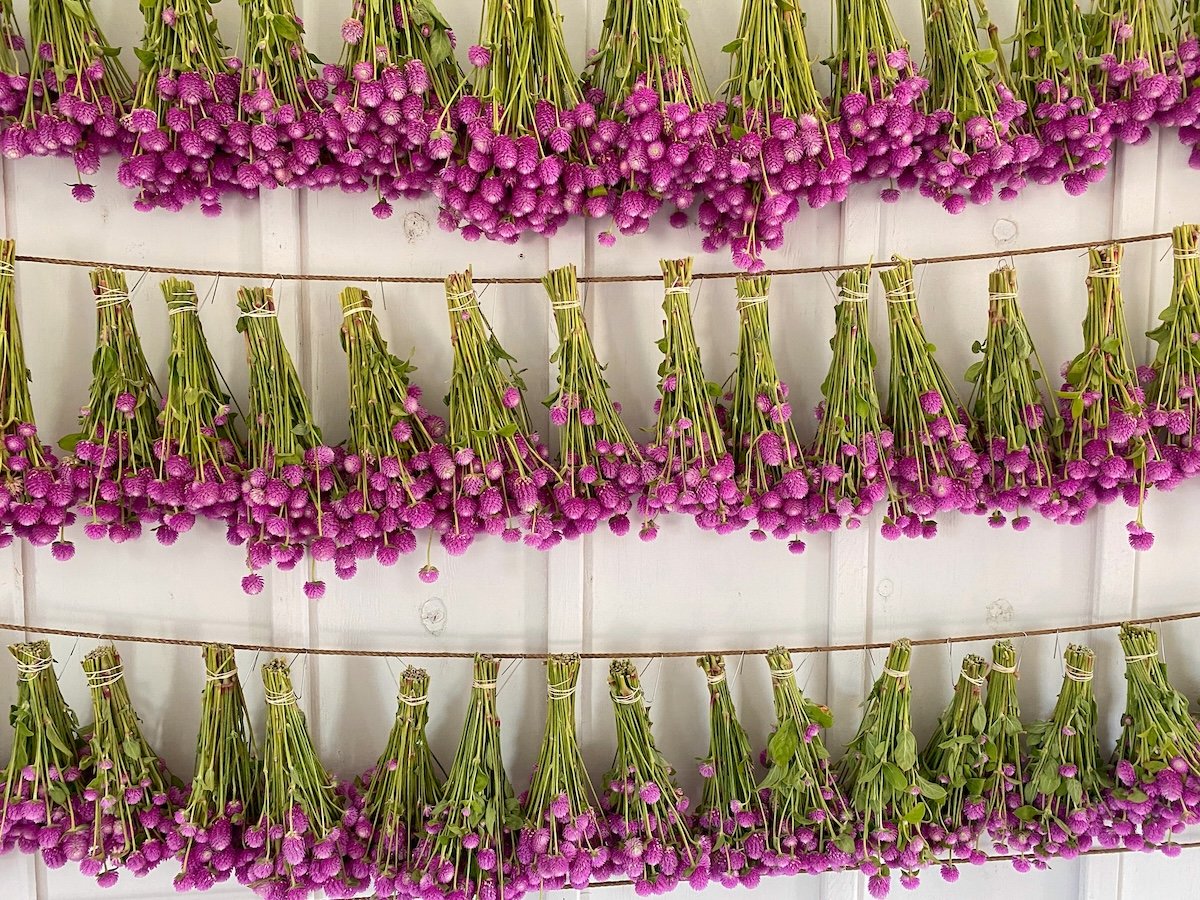
Once cut, we strip the extra leaves from the stems and gather the flowers into small bundles of around 10-20 stems. It’s important not to make the bundles too large, as good air circulation helps prevent mold. We secure the stems tightly with twine or a rubber band, and will hand from a opened paperclip, knowing they’ll shrink slightly as they dry.
Then we hang them upside down in a dry, dim or artificially lit, well-ventilated space. A barn beam, a spare room, or even a quiet corner works beautifully. Keeping your dried flowers out of direct sunlight helps preserve their color. From there, all that’s left to do is wait.
Most flowers take a couple of weeks to fully dry, depending on humidity and the variety. You’ll know they’re ready when the petals feel crisp and the stems snap cleanly.
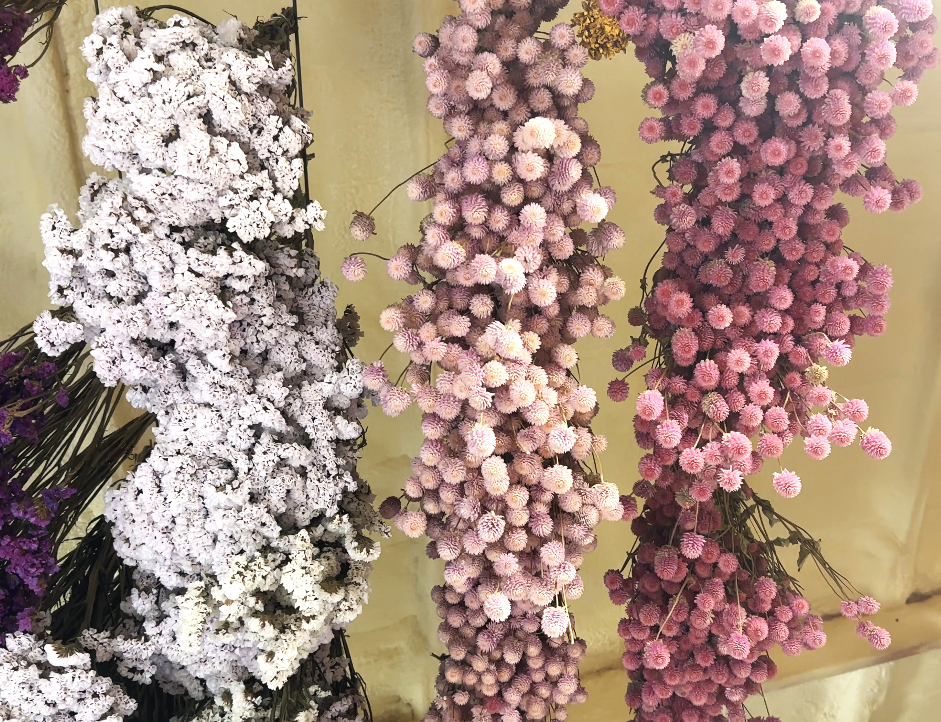
Air Drying Flowers
Hang a rope, or a metal chain from the rafters, rubber band your bundle and hang using an opened paperclip. Simple!
The Flowers That Dry Best
Some flowers naturally lend themselves to drying. Over the years, we’ve had wonderful success with lavender, statice, strawflower, blue globe thistle, celosia, yarrow, nigella pods, gomphrena, and pennycress. These blooms tend to hold both their shape and color beautifully.
For us, part of the joy is experimenting with which flowers work and which don’t. Not every flower dries perfectly, and that’s okay. There’s beauty even in the unexpected shapes and faded tones.
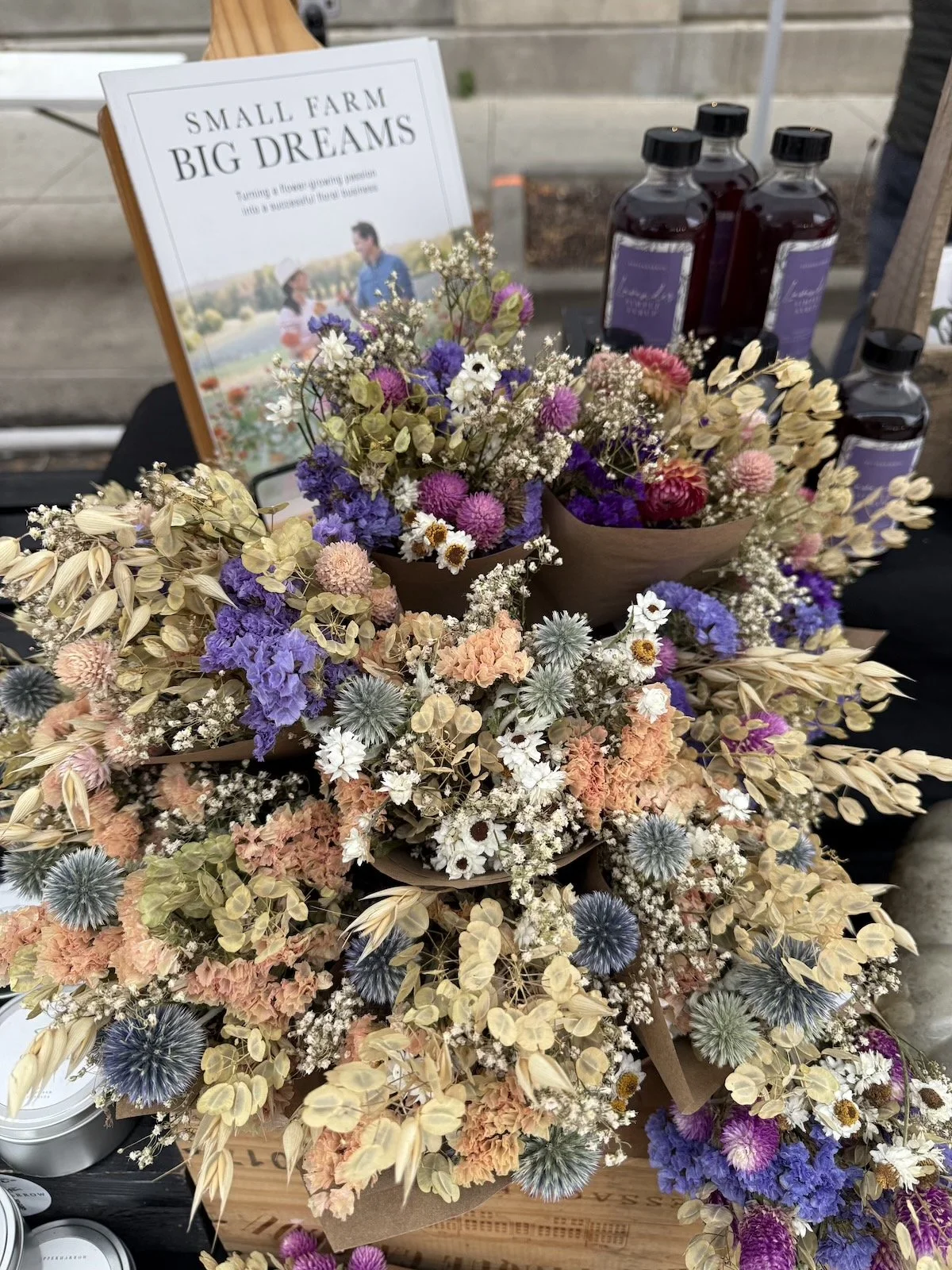
Uses for Dried Flowers
We transform our dried flower bunches into mixed, mini dried bouquets, straight-stem bunches, and lush bunched arrangements in vases designed to bring warmth and texture into the home. Some dried blooms become flower confetti for celebrations, while delicate stems and accents are crafted into dried flowers for styling, gifting, and creative projects. When the holidays arrive, those same summer blooms reappear as ornaments, wreaths, and keepsakes. All little bits of the growing season that last far beyond it.
In autumn, dried flowers truly shine. We love pairing them with mini pumpkins for a look that feels effortlessly cozy and seasonal. The softness of dried grasses, seed heads, and blooms layered against the sculptural charm of pumpkins creates arrangements full of movement, earthiness, and fall magic. Whether tucked into a centerpiece, styled on a mantle, or gifted as a small seasonal gesture, dried flowers and mini pumpkins together capture everything we adore about this time of year.
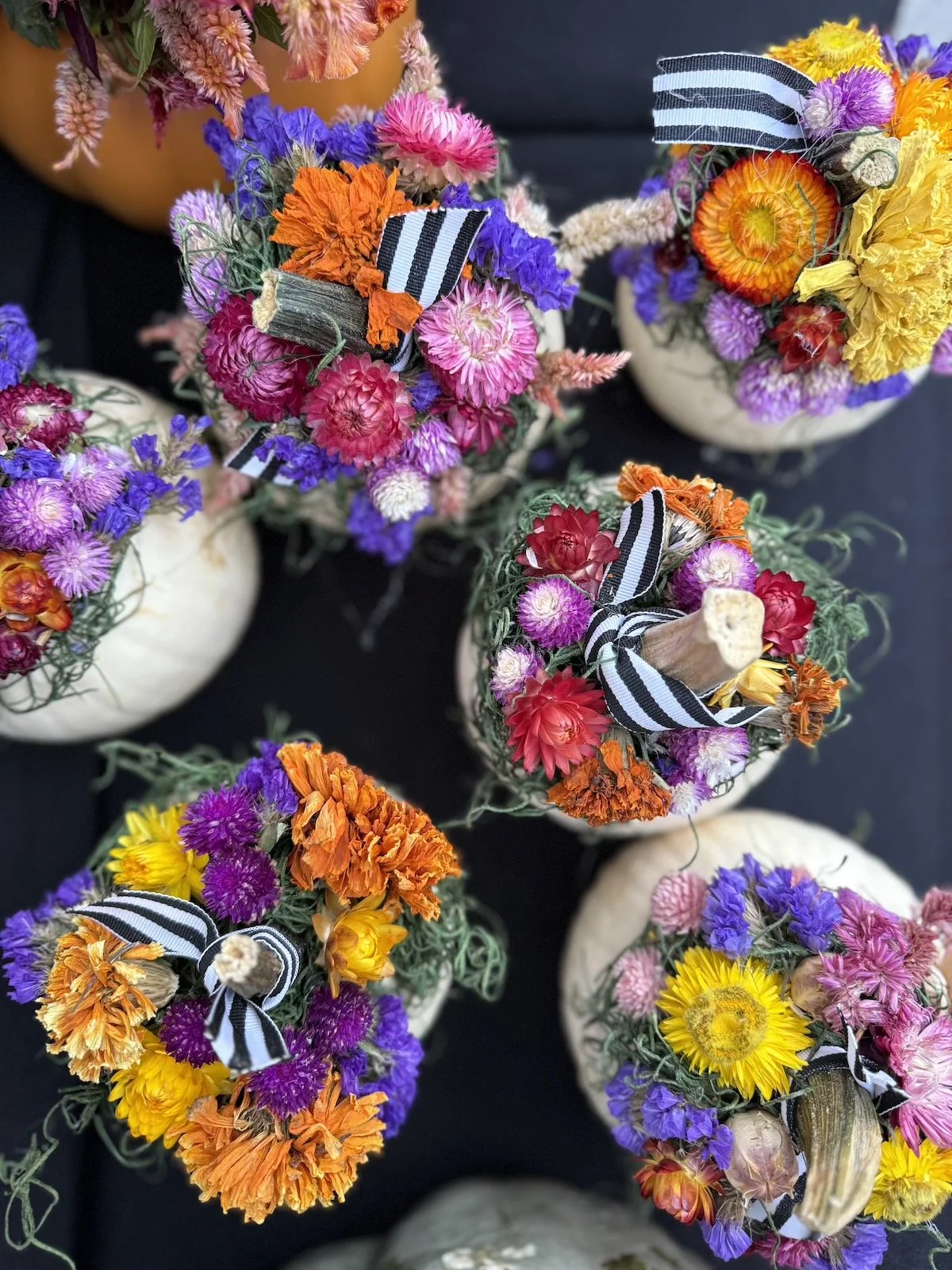
Pumpkins with dried flowers on top are a really popular item with our customers during the autumn season. You can see why! The vibrant colors really make these little pumpkins pop.
Bringing the Garden Indoors
Once dried, it always seems like the flowers take on a new life. We love placing them in simple vessels, in old crocks, ironstone pitchers, wooden bowls. They add texture and warmth to a space without a to of maintenance. Also, dried flowers also make thoughtful gifts. A small hand-tied bundle shared in the winter feels like sharing a piece of summer.
There’s something deeply satisfying about preserving what you’ve grown. Air drying flowers is slow and uncomplicated, much like so many good things on the farm. It asks only for patience, and in return, it gives you beauty that lingers long after the last frost.
If you’ve never tried drying your own flowers, we recommend to start small. Cut a handful, tie them up, and hang them somewhere quiet. You may find, as we have, that it becomes a fun, integral part of the season.
Exclusive PepperHarrow Celosia Seeds
Celosia has become one of the most beloved annuals on our farm. With their unique blooms, long vase life, and stunning dried flower presence, these varieties bring vibrant color, texture, and personality as they grow in the garden and also bring a unique touch to bouquets. Whether you’re designing wedding florals or filling a cutting garden, our celosia selections offer something special for every style.
📅 Seeds go live in our online shop on January 17th at noon Central!
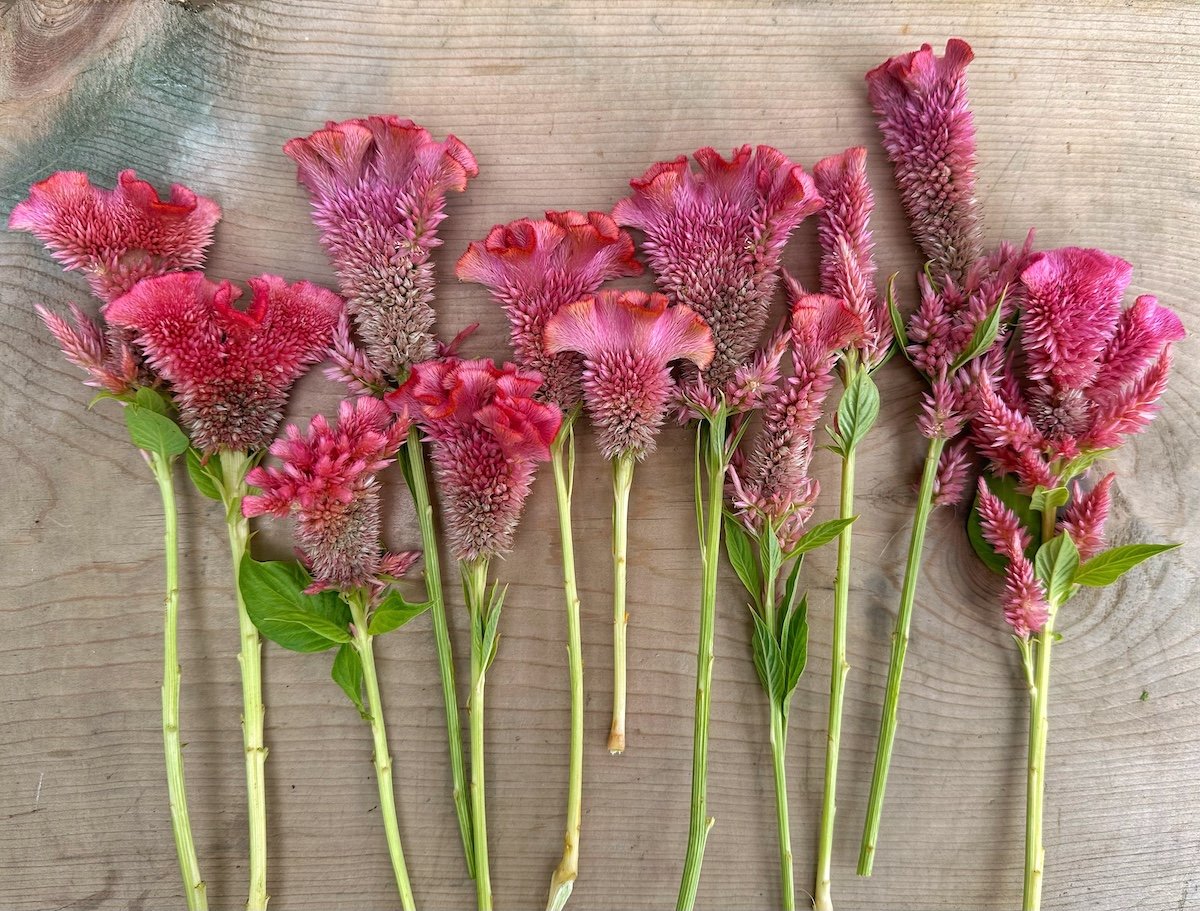
Pink Lemonade
This is a wonderful mix of dark pinky-peachy blooms that also sometimes throw a mauve to true pink bloom. They’re a treat!
Pink Lemonade is a favorite addition for growers and florists alike. Its dark pink/peachy blended with warmer tones creates a lively, summery look in gardens and arrangements. Their feathery plumes catch the light perfectly, making it unique. They’re excellent for fresh bouquets and drying for later use
Chester Copperpot
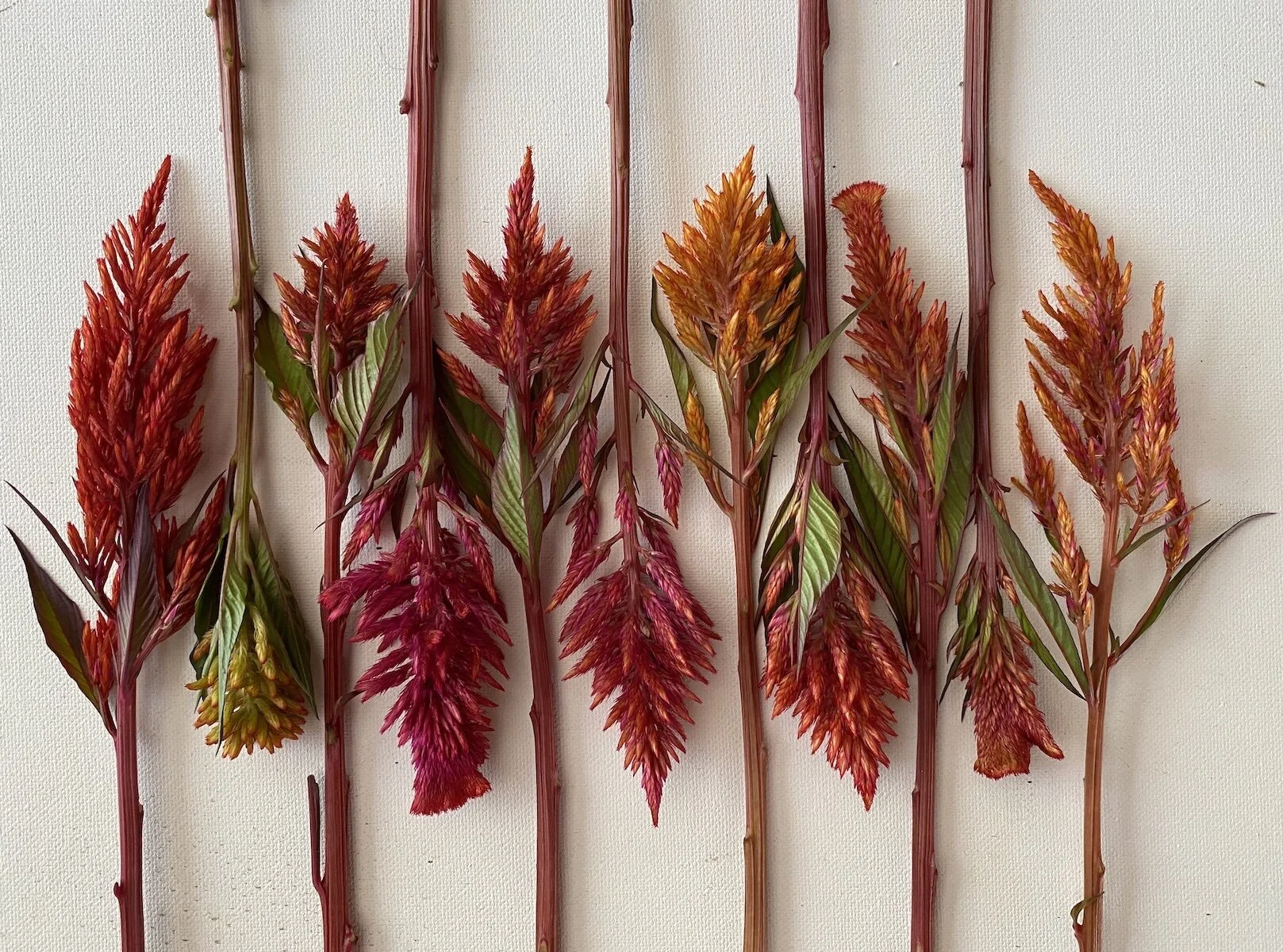
The very first celosia we created, originally crafted from our Peaches mix. This beloved variety has remained our #1 best seller season after season.
Our Chester Copperpot Mix has quickly become a standout. Developed over six growing seasons, this Celosia argentea blend features stunning tones of coppery orange, soft gold, muted orange, and deep magenta red, reminiscent of autumn’s warm glow. Its softer, earthy palette makes it perfect for fall bouquets and more rustic arrangements.
Starlight
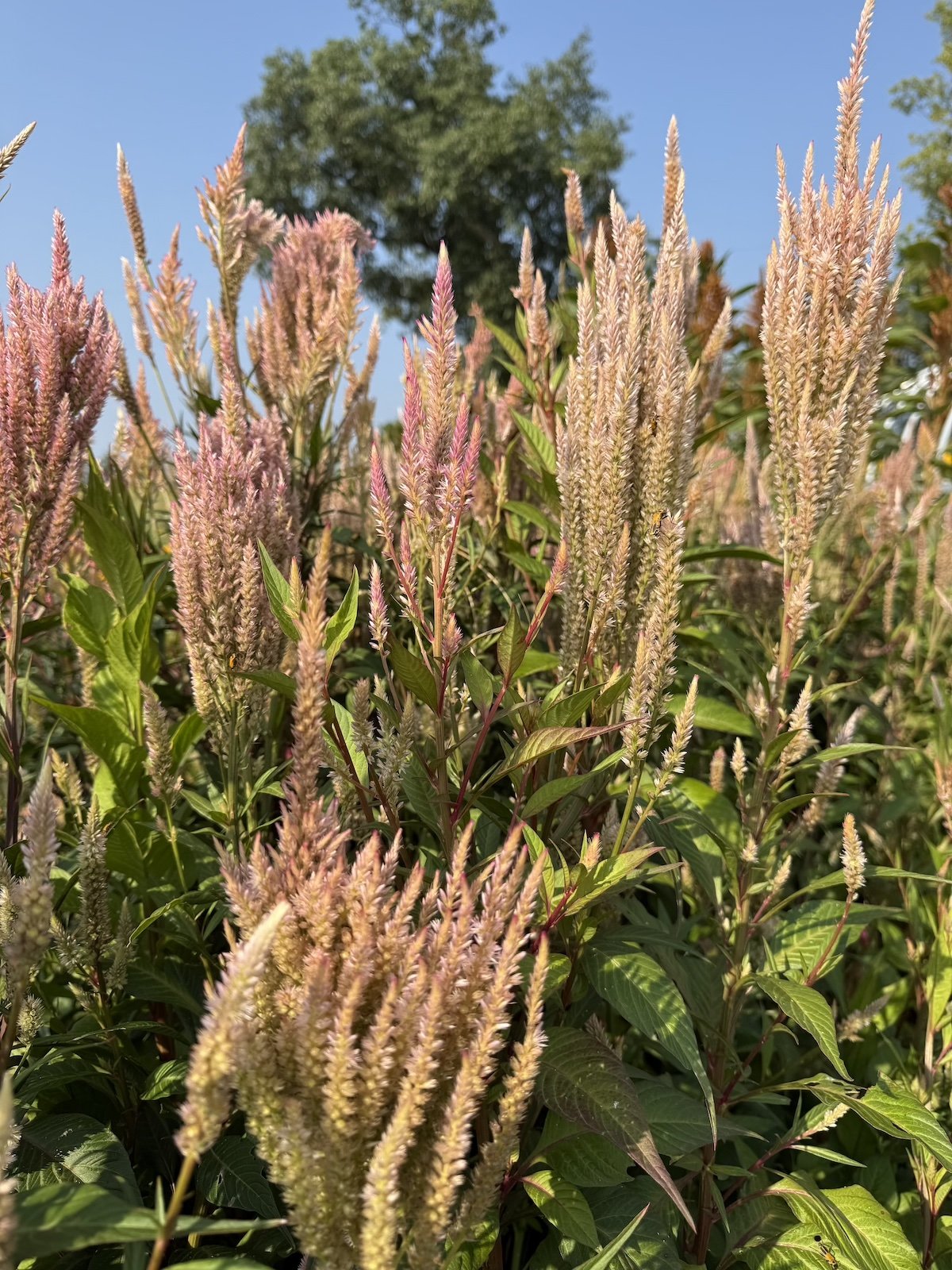
This is the best celosia to use for wedding and event work. We love a good plumed (argentea) celosia. This one fits the bill for the perfect shape and excellent, workable color.
For something a little more ethereal, Starlight Plumed Mix is a magical choice. These Celosia argentea plumes have a silvery-blush to peachy shade, making them especially lovely in wedding designs, elegant bouquets, or anywhere you want a touch of soft shimmer. They’re also excellent for drying and retaining their gentle hue long after the season ends.
Rainbow Sherbet
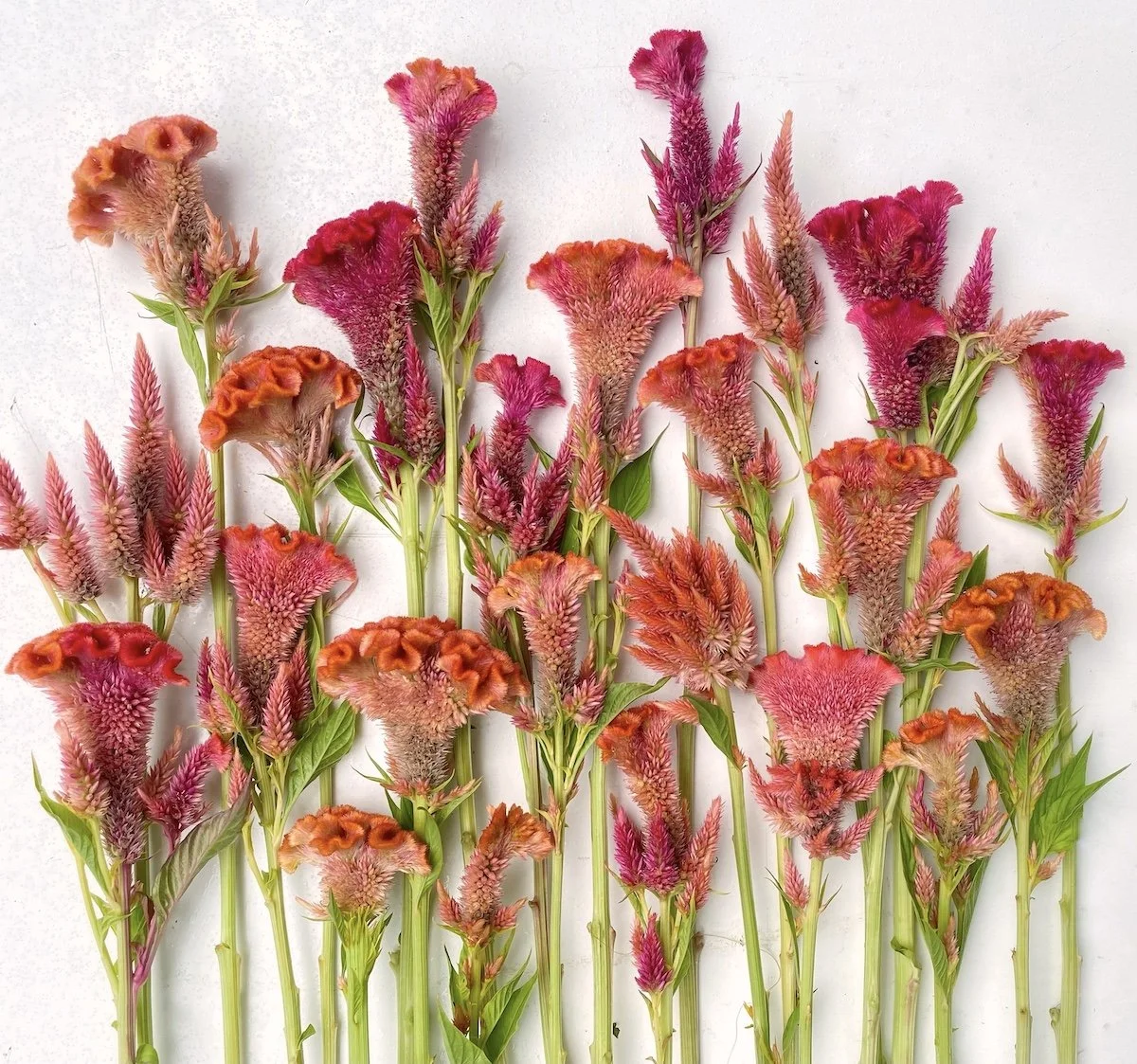
Our customers also really love this funky beauty. You’ll occasionally find a stem that’s both hot pink AND peach-the coolest! There are only a few of this beauty available this year, as we are working to replenish our offering.
If you love color that pops, Rainbow Sherbet Mix delivers crowd-pleasing blooms in hot pinks and orangey peach tones with lush, full plumes. These Celosia cristata plants not only brighten garden beds but also make incredible cut flowers and dry beautifully for everlasting arrangements.

Peaches
This lovely orangey-peach crested mix of celosia is pretty hard to find. Each bloom is perfect, especially for late summer into fall bouquets. They’re a personal favorite for us!
Peaches celosia is our personal favorite for good reason. This Celosia cristata variety produces beautiful, richly hued blossoms in soft peach-toned shades that seem to glow in the summer sun. The classic combed form makes it a standout in both bouquets and autumn displays, and we’ve heard from growers that once you plant it, you’ll be hooked year after year.
Pink Skies
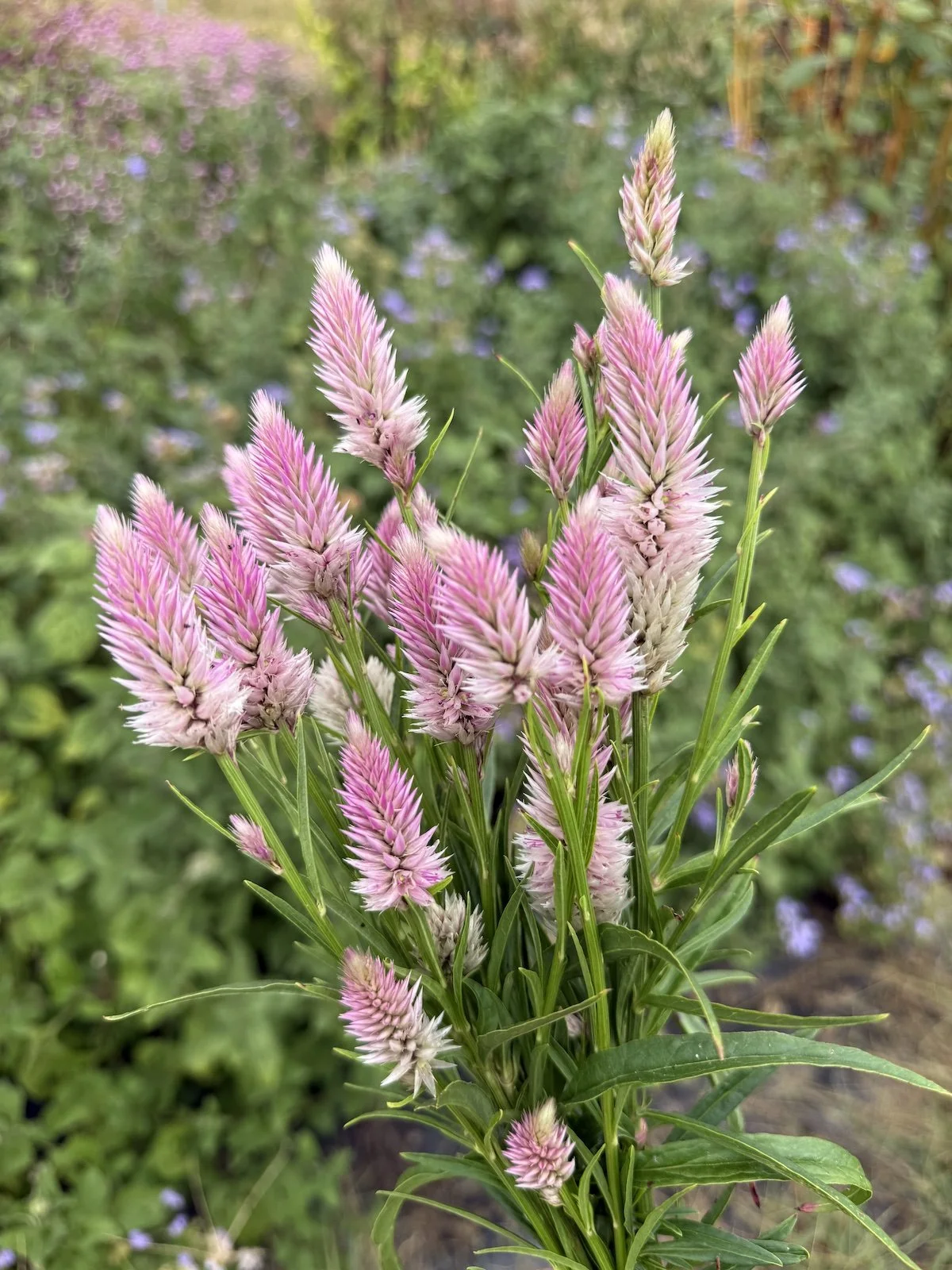
A blush beauty derived from a cultivar of spiked celosia we started growing a few year’s ago, Flamingo Feather. This beauty has morphed into a softer pink shade that’s fun to work with.
Our Pink Skies Celosia (Celosia argentea spicata) brings a gentle, romantic color to the lineup. Think delicate rose tones that drift across a summer garden like, well, pink skies at dusk. This variety is a lovely complement to deeper tones or stands beautifully on its own in soft, pastel-inspired designs.
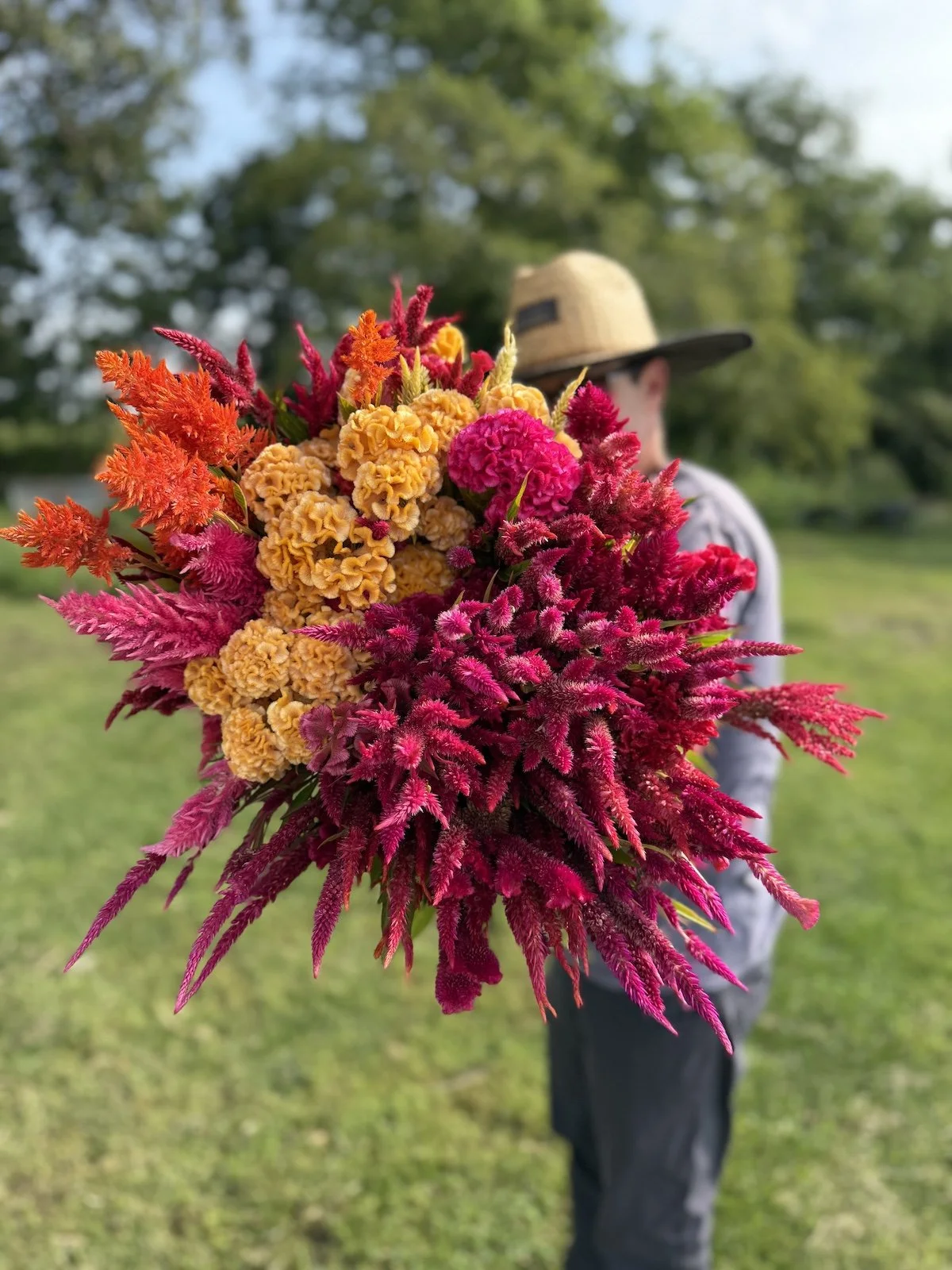
Garden Lovers Mix
Looking to explore different colors and shapes of celosia to find your favorite? Try this beautiful mix! Colors can vary dramatically in each blend. You’ll get anything from peach, orange, hot pink, to golden yellow, hot pink, or burgundy.
The Garden Lovers Mix is a beautiful mix of varied shapes and vibrant colors of celosia from our farm, each bloom showcasing its own unique texture and flame-like form. There’s a wide selection of different varieties to explore, so you can discover which colors and shapes you love most and how they brighten your arrangements.
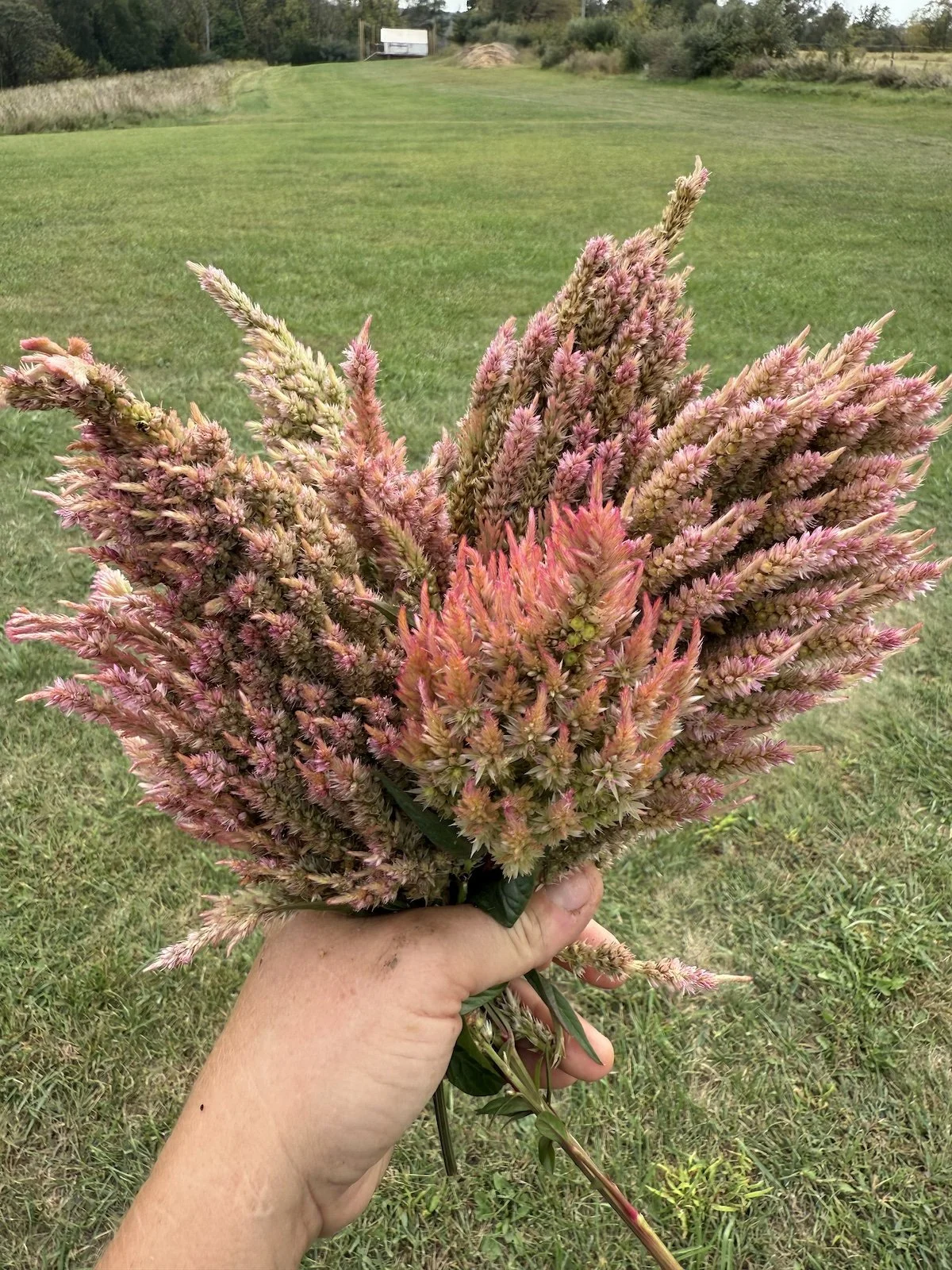
2026 Intro Moonbeam Ice Cream
NEW for 2026! This is a fun mix of celosia seeds that are unusual with their color, shape and size. These unique beauties were best sellers in straight bunched bouquets for farmer’s market all season long. They’re so cool!
We’re thrilled to introduce Moonbeam Ice Cream, a brand-new celosia variety debuting with this year’s seed launch! While we’re keeping the full reveal under wraps until the shop opens, imagine a dreamy blend of orange dream sickle with a touch of moonlit glow, perfect for gardens that glow long into the evening and bouquets with a whimsical twist.
Garden Lover’s Mix Celosia
Need a Few Easy Growing Tips?
Most of our celosia varieties thrive when started indoors 6–8 weeks before your last frost and transplanted outdoors once danger of frost has passed. They enjoy full sun, well-drained soil, and reward you with vigorous growth and abundant blooms throughout the season. Detailed seed starting instructions will be included with every packet, but you can also catch our YouTube video on seed starting celosia here.
Remember to Save the Date!
Our celosia seeds, including all of the above varieties, drop on our online seed shop on January 17th at noon Central. Plan your wishlist, mark your calendars, and get ready to grow some seriously gorgeous colors of celosia in 2026!