
How to Grow Lavender in Iowa
Growing lavender in Iowa sounds like it shouldn't work. The soil is too rich. The winters plunge well below zero. The summers swing between intense heat and suffocating humidity. And yet, here at PepperHarrow Farm in Winterset, we've been growing lavender successfully for over a decade in Zone 5b, central Iowa, cultivated over 18,000 plants across more than 14 acres. It took years of trial, error, and many painful losses to learn what this climate demands. We won't pretend we can fit a decade of hard-won knowledge into a single blog post, but we can share the foundational lessons that every Iowa gardener should understand before putting a single plant in the ground.

Why Lavender Struggles in Iowa (and Why It Can Still Thrive)
Lavender is native to the Mediterranean coast, where summers are hot and dry, winters are mild, and the rocky, alkaline soil drains fast. Iowa offers almost the opposite on paper. Our clay soils retain water like a sponge. Our winters regularly dip to negative temperatures and our summers can feel like a steam room from late June through August.
Here is the most important thing we can tell you: the number one killer of lavender in Iowa is not cold. It's moisture. Specifically, it's moisture trapped around the roots during winter freeze-thaw cycles. When the soil stays wet and temperatures bounce above and below freezing, the crown and roots rot. That single fact should shape every growing decision you make.
The good news is that Iowa does get reliable sun, and with the right variety selection, soil preparation, and winter care, lavender can absolutely thrive here. We've watched plants survive stretches of negative 15 degrees on our farm when the fundamentals were in place.
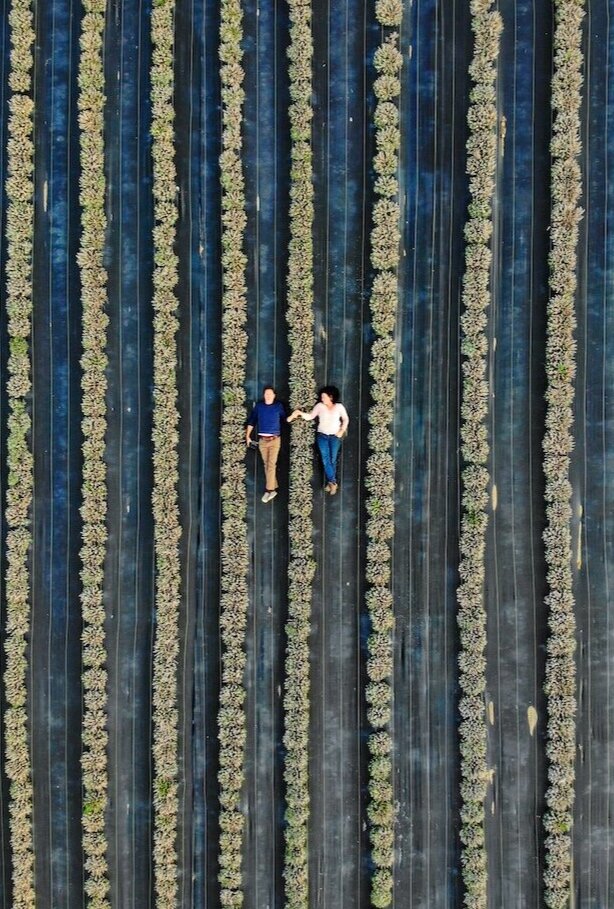
Spring Lavender
Our lavender usually starts to ‘wake up’ around mid May, sending out green shoots, or growing back from the base of the plant.
Choosing the Right Varieties: Not All Lavender Is Created Equal
Variety selection is where many Iowa growers fail before they even start. Walk into a big box store in May and you'll find gorgeous French and Spanish lavender on the shelf. They look incredible. They will also be dead by February. Those varieties are only hardy to Zone 8 and simply cannot survive our winters outdoors.
What does work in Iowa? English lavender (Lavandula angustifolia) and select hybrid cultivars (Lavandula x intermedia) are your foundation. Within those species, specific cultivars matter. Some handle our humidity better than others. Some hold up to our freeze-thaw cycles more reliably. Some produce better blooms in our shorter growing window.
We've tested dozens of cultivars over the years on our farm. A few names to start your research: Munstead and Hidcote are widely recognized as cold hardy performers, and Phenomenal has earned a strong reputation for disease resistance in humid climates. But knowing which variety to buy is only the beginning. How you plant it, where you place it, and how you prepare your soil will determine whether it actually survives.
We cover variety selection and placement strategy in depth in our online Lavender Masterclass, where you can see how each cultivar performs in real Iowa growing conditions, side by side, in our fields.
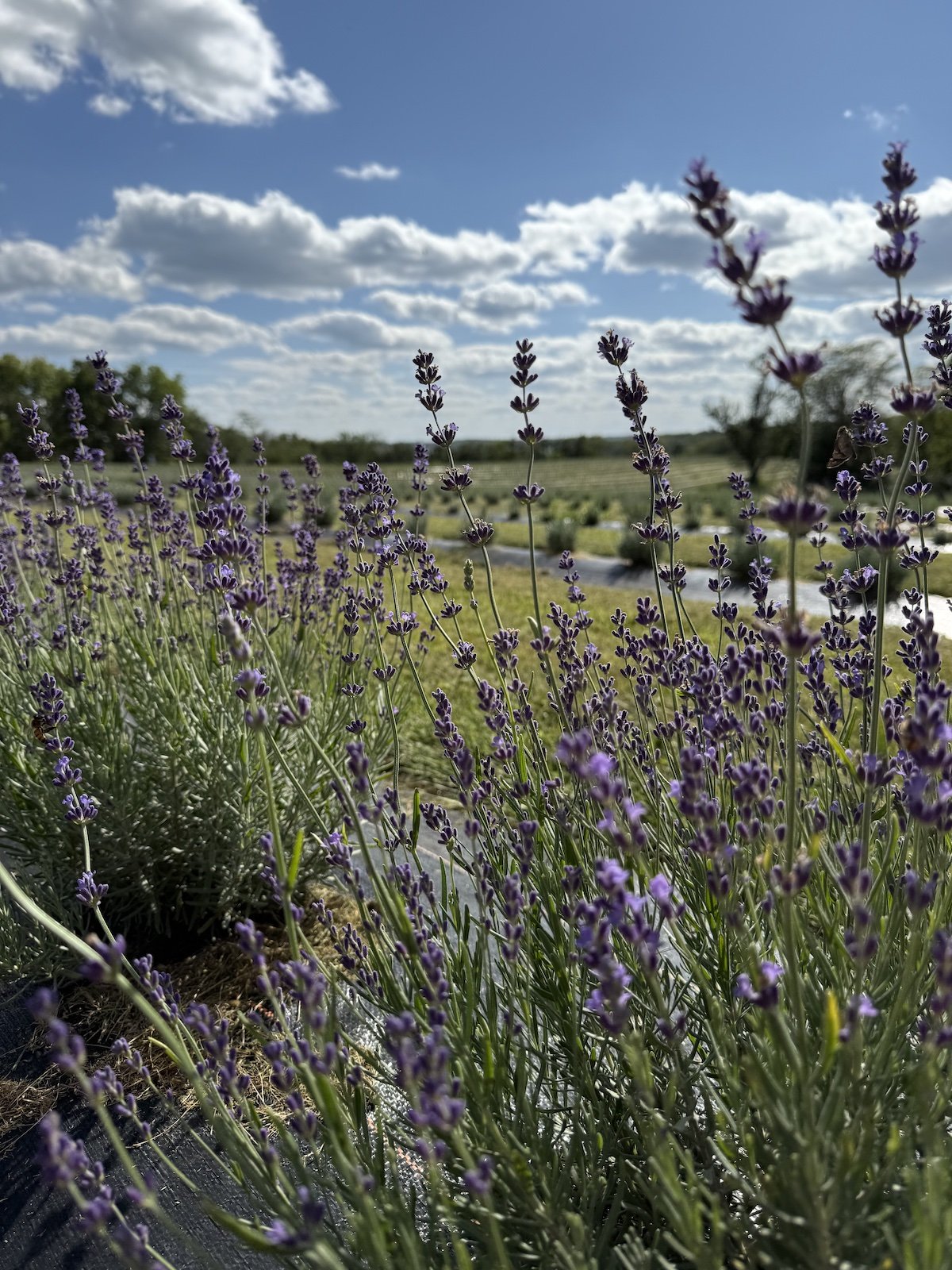
Lavender Varieties
We grow over size different varieties of Lavender and continually experiment with new varieties. Hidcote is the variety shown here. A very reliable lavender for growing in Iowa.
The Challenge Every Iowa Grower Must Solve-The Soil
If you take one thing away from this post, let it be this: drainage is everything. Lavender roots sitting in wet soil will rot, and Iowa's heavy clay makes that a constant threat.
The principle is straightforward. Lavender wants soil that drains fast, stays on the lean side nutritionally, and trends slightly alkaline (a pH between 6.5 and 8.0). Iowa's native clay soil does none of those things naturally. That means you need to actively engineer your planting environment. You're not just digging a hole and dropping in a plant, you're building a micro-habitat.
There are several approaches to solving this, from amending in place to building raised beds to installing gravel underlayers. Each has tradeoffs depending on your scale, your existing soil composition, and your budget. What we'll say is this: don't underestimate this step, and don't skip soil testing. Many gardeners invest in beautiful plants and then lose them because they treated soil prep as an afterthought.
The specific soil amendment ratios and bed construction methods we use at PepperHarrow are techniques we've refined over many growing seasons. We share our full approach in our online lavender growing course.

Planting, Timing and Spacing
Two principles to keep in mind for Iowa:
Plant in late spring. In central Iowa, that typically means mid-May after the last frost risk has passed. Planting too early, when spring weather is still swinging between 70 and 30 degree days, stresses young plants and invites root rot before they've established.
On the otherhand, don’t plant too late. We recommend planting not any later than July 1st. Beyond that time, you risk losing your plants over the winter. They need plenty of time to establish before the harsh, cold weather sets in.
Give your plants room to breathe. This is one of the most common mistakes we see. It's tempting to plant close together for a fuller look right away, but in Iowa's humid summers, air circulation is your best defense against fungal disease. Crowded plants trap moisture in the canopy, and moisture is the enemy. We space our plants generously. The specific spacing depends on the cultivar and the layout, but we like to keep an average of two feet per plant.

Lavender Self-Care Products
All of the lavender we harvest from our fields is distilled by hand, right at the farm. The harvested lavender buds are steam-distilled into essential oil, and used to make natural beauty and self-care products, such as our popular lavender body oil.
Seasonal Care - The Approach for the Midwest
Caring for lavender in Iowa is not the same as caring for it in Oregon or Provence. Our climate demands a different strategy.
A few principles that guide our seasonal approach:
Water less than you think. Overwatering is far more dangerous than underwatering for lavender in Iowa. Once plants are established, they are remarkably drought tolerant. If the leaves start yellowing, that's almost always a sign of too much moisture, not too little.
Feed sparingly. Lavender prefers lean, nutrient-poor soil. Rich Iowa garden soil and heavy fertilizer programs actually work against you here, encouraging soft growth that's more vulnerable to winter damage.
Summer humidity is your toughest season. July and August in central Iowa test every lavender plant. Good airflow, proper spacing, and your approach to mulching all play a role in getting through these months. This is where your soil prep and variety selection either pay off or catch up with you.
The nuances of our seasonal care calendar, from exactly when we shift watering patterns to how we manage mulch through Iowa's unpredictable shoulder seasons, are topics we go deep on during our farm workshops. There's a rhythm to it that's easier to show than to write about.
Winterizing: Where Most Iowa Growers Lose Their Plants
Winter care is the make-or-break season for Iowa lavender. Get this wrong and everything else you did right won't matter.
The key principles:
Do not prune in fall. This is critical. Fall pruning encourages tender new growth that will be killed by winter cold. Save all pruning for spring. We know it's tempting to tidy things up in October. Resist that urge.
Dry conditions going into winter matter more than you realize. As plants go dormant, they need to be dry. The combination of wet soil and freezing temperatures is what causes root rot and crown damage.

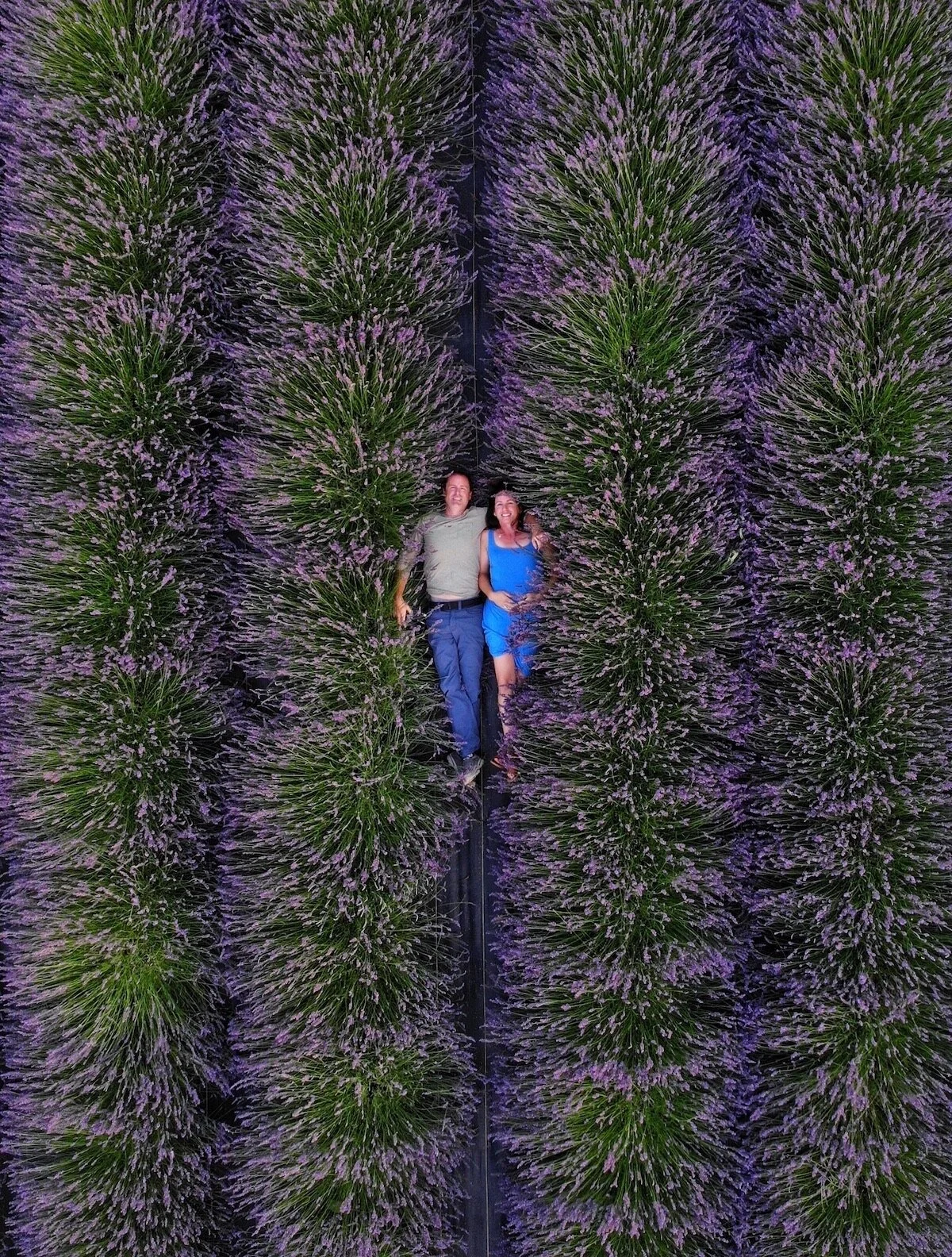
Lavender Field at PepperHarrow
Snow is your friend. A consistent blanket of snow is actually one of the best natural insulators.
We've lost plants to winter. Every lavender grower in Iowa has. The difference between occasional losses and losing entire plantings comes down to a winterization approach tuned to your specific site conditions. It took us several seasons to dial in our method. In our workshops and online course, we walk through the full winterization process step by step, including the adjustments we've made after especially brutal winters.
Pruning Lavender Plants
Proper pruning is one of the most underrated skills in lavender growing. Done well, it keeps plants productive and healthy for many years. Done poorly (or not at all), plants become woody, leggy, and stop flowering.
The golden rules: prune in spring (not fall), never cut into old bare wood (it won't regenerate), and shape for airflow. The timing, angle, and extent of each cut matter, and they vary by cultivar and plant age. This is honestly one of those skills that's best learned hands-on, which is why we include live pruning demonstrations in our spring workshops.
Harvesting Lavender

Bundle of Harvested Lavender
Most English lavender varieties will begin blooming in mid-June in central Iowa, with peak harvest in late June through early July. The timing of your cut affects the fragrance, oil content, color retention, and vase life of the stems. We harvest thousands of stems each season for our handmade products, dried arrangements, and farm shop, and the precision of that timing is something we've fine-tuned over many harvests.
If you're growing at home, a good starting point: harvest when buds are showing color but before they fully open. That's when the essential oil concentration tends to be highest. Cut stems long, bundle them, and hang them upside down in a dark space with good airflow.
Come See What's Possible
If you'd like to see thriving lavender in Iowa with your own eyes, we'd love to welcome you to PepperHarrow Farm in Winterset for our annual Lavender Festival. Our 60-acre farm in Madison County is home to over 18,000 lavender plants, acres of seasonal cut flowers, a bespoke farm shop full of handmade lavender products, and experiences ranging from floral workshops to al fresco style farm dinners to glamping stays.
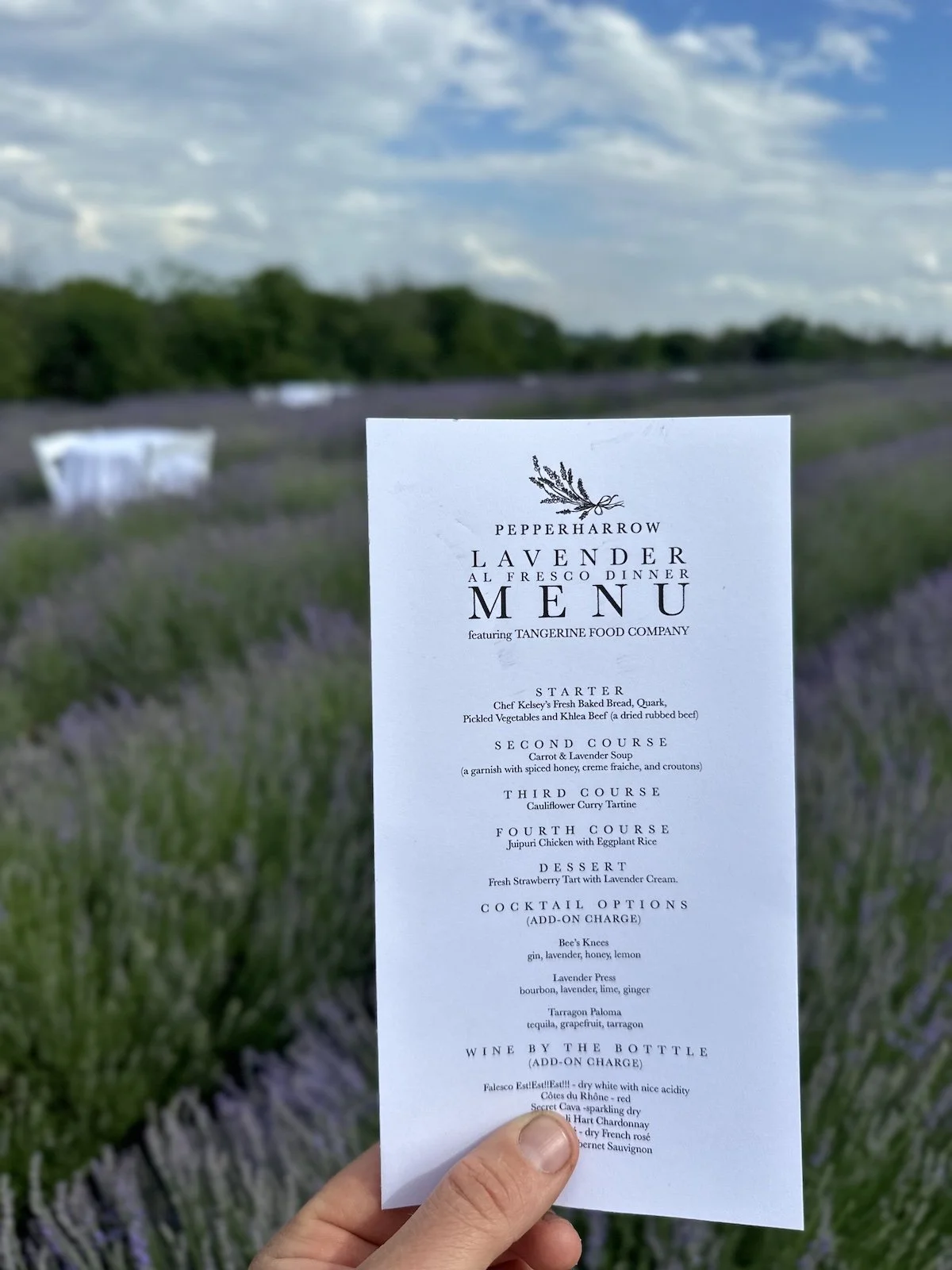
Lavender Al Fresco Dinner
Guests love to visit the farm to see the lavender in bloom, especially when it’s paired with excellent food and a truly unique experience. The Lavender Al Fresco Dinner is held once a year at the farm, typically in mid-June when the lavender reaches its peak bloom and the fields are at their most fragrant and picturesque.
For those who want to go deeper:
Our on-farm lavender workshops cover variety selection, soil preparation, planting technique, seasonal care, winterization, pruning, and harvesting with hands-on instruction in our fields. View upcoming workshops
Our online lavender growing course brings that knowledge to growers who can't visit in person, with detailed lessons drawn from over a decade of growing in Iowa's challenging conditions. Learn more
Our Bloom Membership keeps you connected to the farm throughout the growing season, with bouquet pickups, behind-the-scenes access, and early invitations to events and limited releases. Explore membership
We also sell a full line of farm-made lavender products, from salves and soaps to candles and sachets, all made with lavender grown and harvested right here in Winterset.
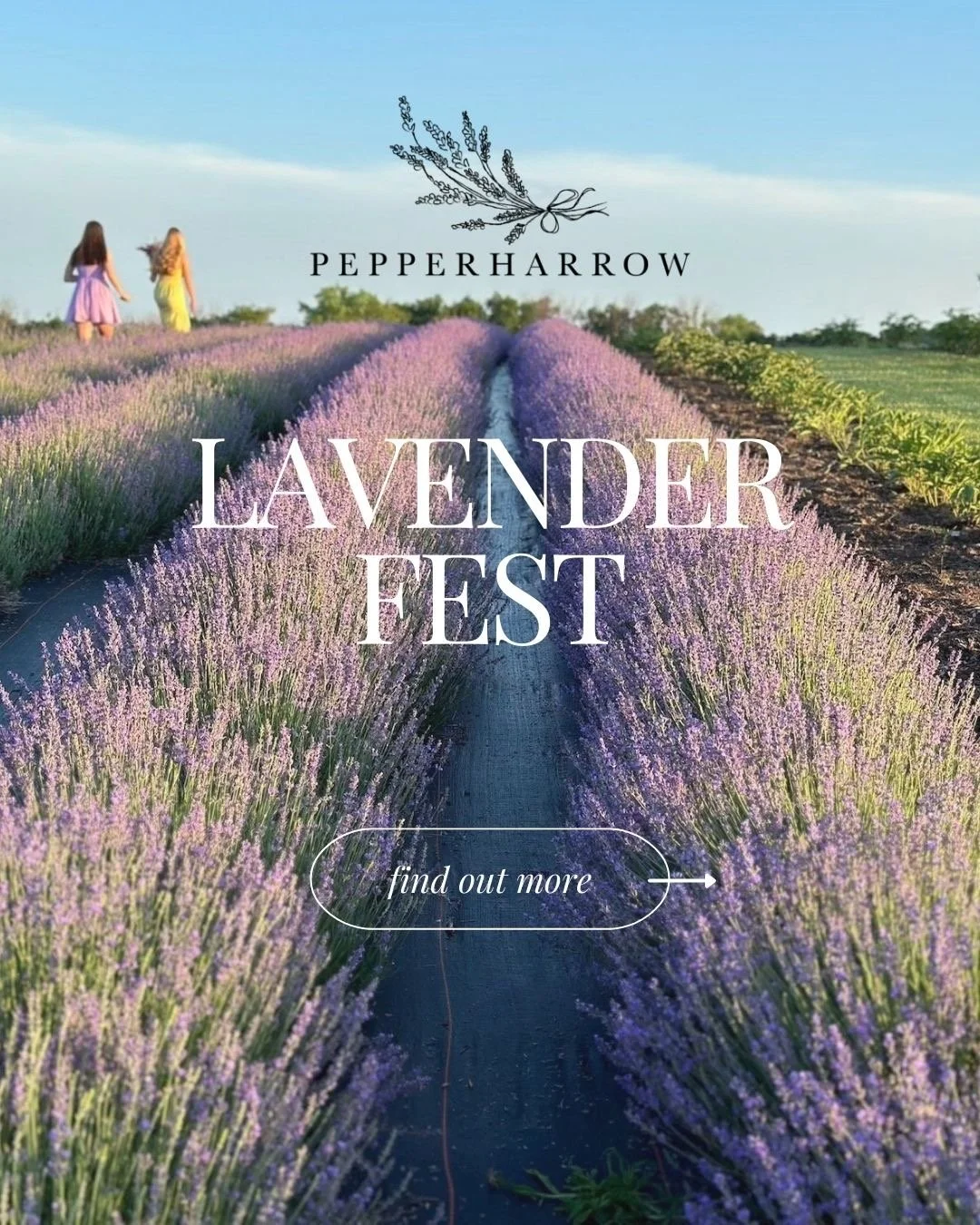
Lavender Festival
Held once each June, the Lavender Festival at PepperHarrow is a celebration of lavender in full bloom. At the height of the season, the fields turn a breathtaking shade of purple, an unforgettable sight that invites you to slow down, breathe deeply, and soak in the beauty of the farm!
Guests are invited to experience the farm in a hands-on, meaningful way. Stroll the fields, enjoy guided farm tours, and learn from live lavender demonstrations ranging from baking and culinary uses to cocktail crafting and distillation. Capture stunning photos among the blooms, then harvest your own fragrant bouquet to take home.
Growing lavender in Iowa is absolutely possible. It just takes a little patience, and a willingness to do things differently than the generic advice suggests. We hope this post gives you a few tips, and a starting point, and we'd love to help you take the next step!
XX Jenn and Adam
