
Common Issues with Zinnias And What to Do About It
Zinnias are one of our favorite flowers, because of their incredible color, easy growing habits, prolific blooms, and ability to attract pollinators. But even these stunning flowers can face a few challenges. Whether you're a seasoned gardener or just planted your first seeds, it helps to know what could go wrong and how to fix any issues that might crop up.
We get flower farming questions all the time, specifically about zinnias, so we thought we’d share some of the most common issues with zinnias and what you can do to keep your plants happy and blooming all season long!

Powdery Mildew
Powdery mildew looks like a white, powdery coating on leaves of the plant that usually starts on the lower foliage and spreads upward. It can be caused by humid conditions, poor air circulation, or overhead watering, all of which create a perfect environment for this disease.
What to Do:
Space plants out properly to improve air circulation.
Water at the base of the plant rather than from above.
Remove and dispose of infected leaves (don’t compost them).
Use a fungicide labeled for powdery mildew if the problem is widespread. Organic options like neem oil or a baking soda spray can be effective.
Our best tip to fight - foliar feeding the leaves with compost tea. Check out Adam’s video on how to create compost tea here.
Too Much Water (Root Rot)
When your zinnias have too much water, otherwise known as root rot, you may notice yellowing leaves, wilting despite moist soil, stunted growth, and sometimes, a foul smell from the roots. Zinnias dislike wet feet, so overwatering or poor drainage can lead to root rot and fungal infections.
What to Do:
First off, make sure your soil drains well. You can fix this with compost or sand if needed, or by making raised bed gardens for growing.
Let the soil dry slightly between waterings.
Water early in the day so the soil can dry out before nightfall.
If root rot is suspected, gently remove the plant, trim off mushy roots, and replant in fresh, dry soil.

Japanese Beetles
Japanese beetles are notorious zinnia lovers and will feast on both leaves and flowers. If your zinnias have skeletonized leaves (they eat the leaf tissue between the veins), holes in petals, or entire flowers have been consumed, it’s most likely Japanese beetles
What to Do:
Handpick beetles in the morning when they’re sluggish and drop them into soapy water.
Use row covers early in the season to keep beetles off young plants.
Avoid beetle traps nearby as they seem to attract more than they catch.
Apply neem oil or an insecticidal soap if infestations get out of control.
Leaf Spot Diseases
Leaf spot diseases look like brown or black spots on leaves, sometimes with yellow halos. Severe infections may cause leaves to drop. These diseases are caused by bacterial or fungal pathogens, often triggered by splashing water or humid conditions.
What to Do:
Avoid overhead watering and splash back from soil.
Prune away affected leaves and discard (not in compost).
Consider using a copper-based fungicide or a bio-fungicide if it persists.
Practice crop rotation and clean up all plant debris at season’s end.
Stunted Growth or Weak Stems
Zinnias with weak stems or who have been stunted will stay small, have thin stems, or flop over. Causes can include poor sunlight, overcrowding, or low soil fertility.
What to Do:
Make sure zinnias get full sun (6+ hours/day).
Thin seedlings to allow room to grow and encourage strong stems.
Feed with a balanced, slow-release fertilizer or compost to boost growth.
Pinch back early growth to encourage bushiness and sturdier stems.

No Blooms or Few Flowers
Sometimes, zinnias grow healthy green plants but with few or no flowers. If this is the case, there might be too much nitrogen in the soil, not enough sun, or overwatering has occurred.
What to Do:
Avoid high-nitrogen fertilizers (they promote foliage over flowers).
Ensure full sun exposure.
Deadhead spent blooms to encourage more flowering.
EXTRA TIP-Blooms Won’t Hold Up in a Vase:
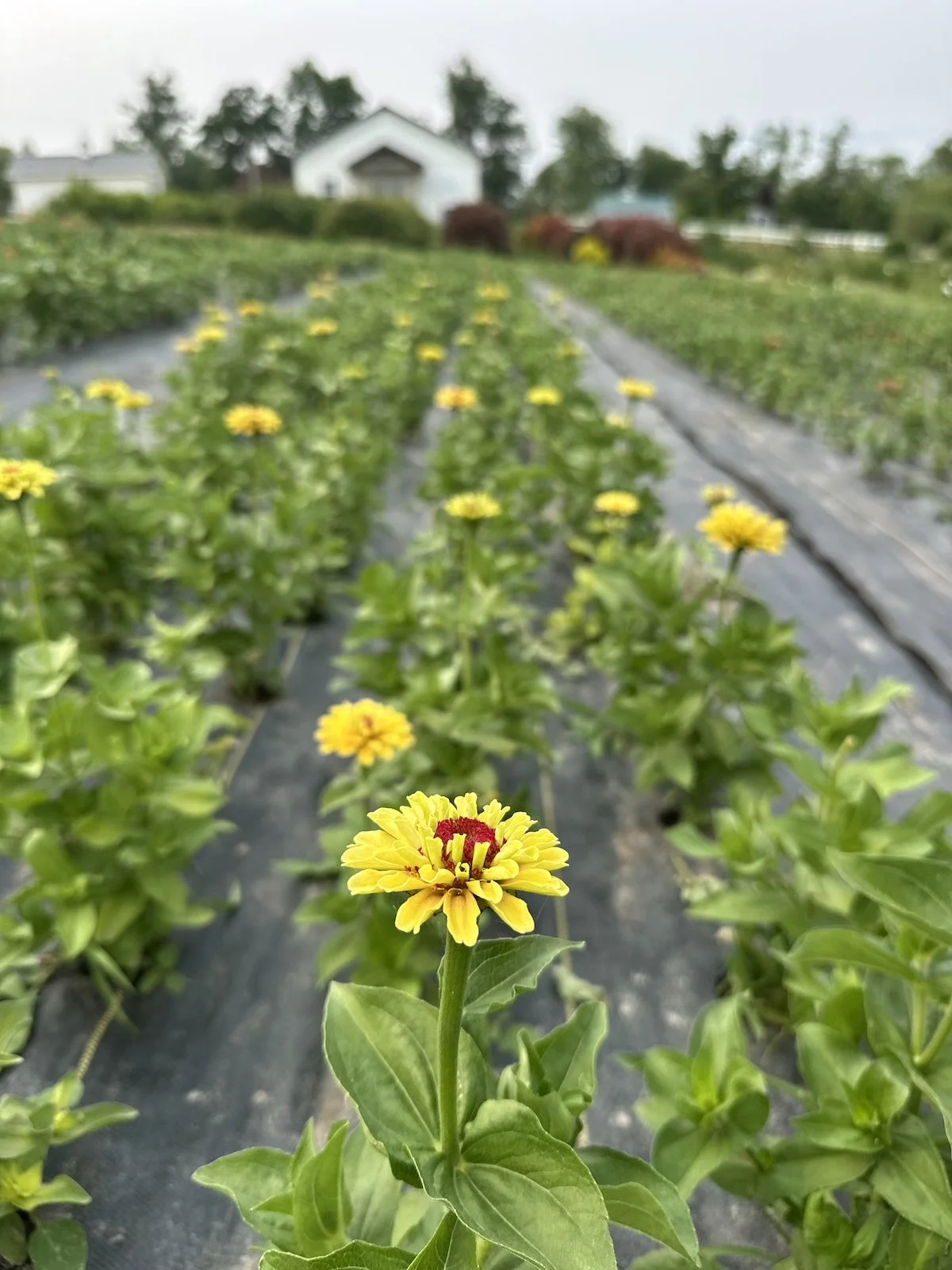
Zinnia blooms have to be mature before they can be cut and used as a cut flower in a vase. The trick? Try the “wiggle test.” Gently hold the stem about 8–12 inches below the bloom and give it a little shake. If the flower head wobbles loosely, the stem is still too young and won’t hold up in a vase. If the bloom stands firm and steady, it has matured enough to be harvested. This simple test helps ensure your zinnias last longer once they’re cut.
Even though there are several issues to look out for, we want you to know that zinnias are very durable, easy to grow, extremely hardy flowers. Knowing some of the issues that may arise is just a ‘good to know’ and they’ll thank you for a little care and attention, should you need to give them a little TLC. With the right growing conditions, you'll enjoy a summer full of stunning blooms and less headaches. If you’re ready to start growing your own zinnias, stay tuned for more of our zinnia seeds to release in our farm store soon! Happy growing!
XX Jenn and Adam

Iowa Lavender Farms to Explore
Whether you’re a born and raised Iowa local or just passing through on a visit, Iowa is a truly beautiful state filled with a wealth of hidden gems. This is especially true when it comes to charming Lavender Farms scattered across the landscape. Allow us to introduce you to some of the most enchanting Iowa Lavender Farms that you definitely won’t want to miss during your travels or local adventures!
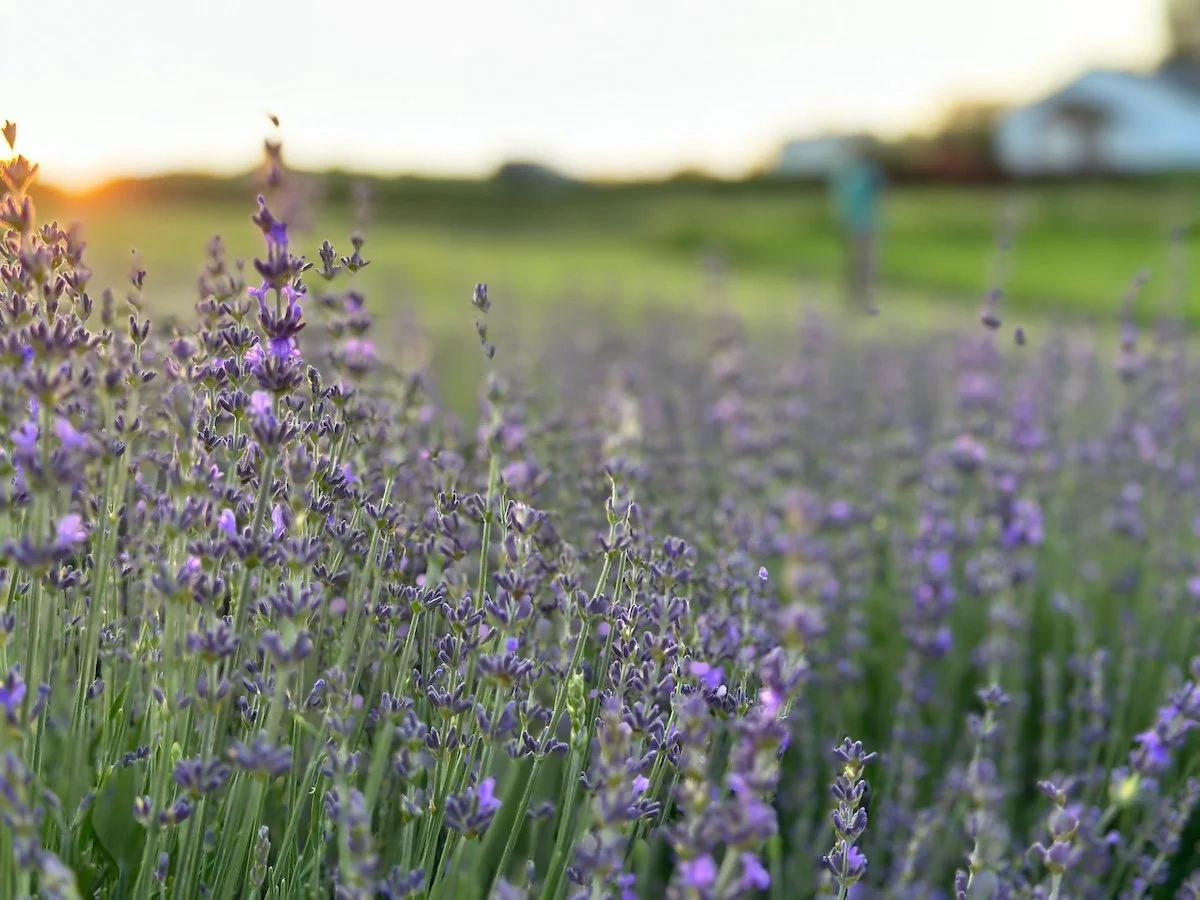
Lavender Growing at PepperHarrow Flower Farm, Near Des Moines
PepperHarrow Lavender and Flower Farm (Winterset / Madison County region)
Of course, we’re partial to our beautiful PepperHarrow Lavender and Flower Farm, nestled in the rolling hills of Madison County. Nearby, you can find the Covered Wagons of Madison County, plenty of history, and all the magic that is Winterset, Iowa.
Founded in 2011, PepperHarrow is one of Central Iowa’s largest lavender operations with more than 18,000 lavender plants across 13 acres. We offer seasonal events, workshops, and other immersive farm experiences set against scenic bluffs.
We’d love to welcome you to the farm for our upcoming classes and events or even a relaxing weekend with a stunning view in our Glamping Tent. If you can’t make it to the farm, we also have a number of amazing and homemade lavender products available on our online farm store. Also, stay tuned for details about our next Lavender Festival. Details for this will be released in early spring!
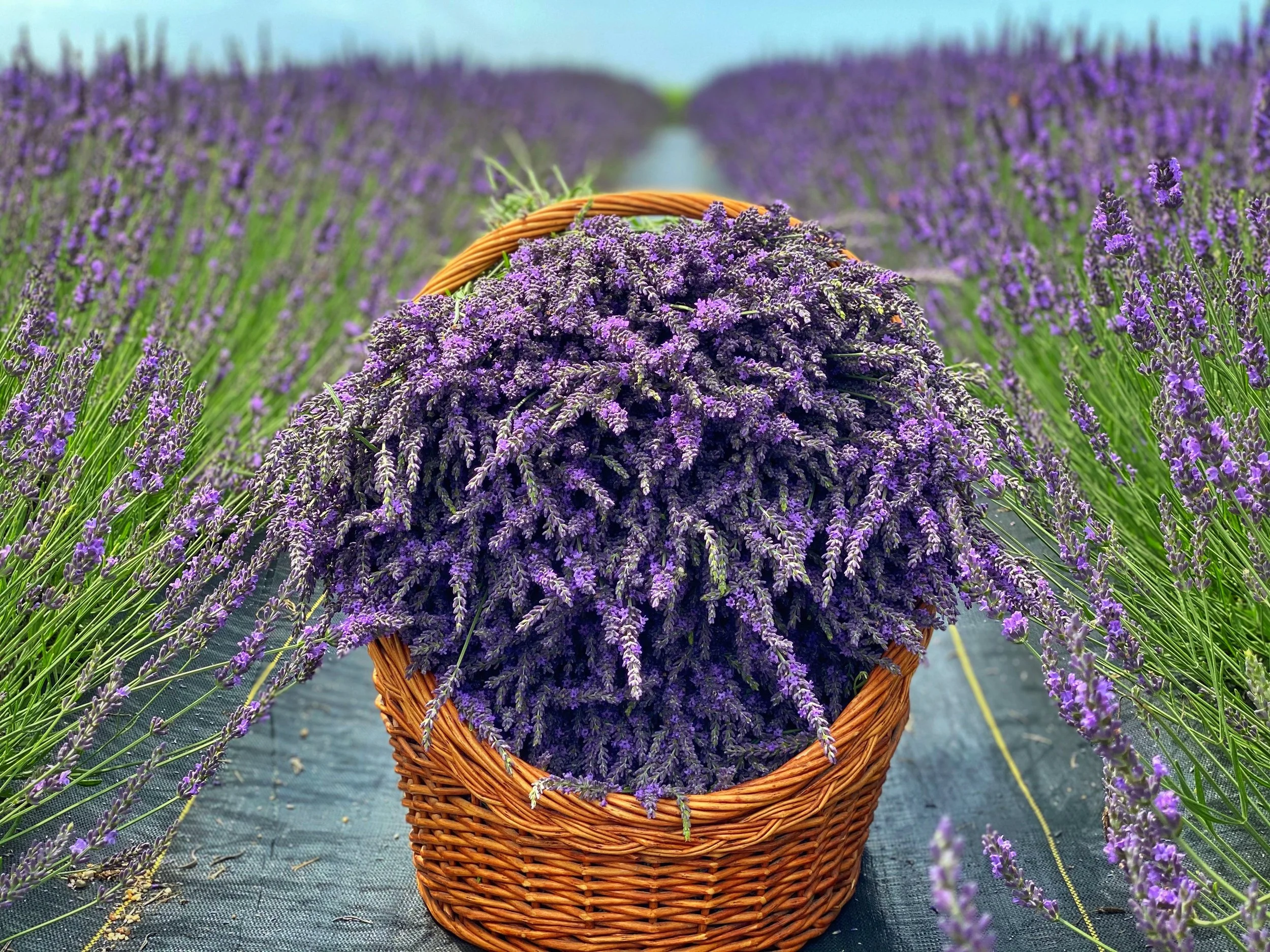
Cut Your Own Lavender
PepperHarrow holds pop-up cut your own lavender events from mid-June through mid-July, during the lavender bloom season.
Iowa Lavender (Ames)
Iowa Lavender is a boutique, family-owned farm planted with its first lavender in 2020. They host a handful of public U‑pick and event days each summer and sell handcrafted lavender products online and at local markets.
Jester Hill Farm (Madrid)
Jester Hill Farm hosts U‑pick lavender events and special gatherings like Tunes & Blooms. They also offer a wide variety of cut flowers throughout the season and a Bloom Club CSA.

Growing Lavender in Iowa
Lavender growing in the midwest can be challenging, due to fluctuations in climate. From hot, humid summers to super cold winters, our lavender has to be able to thrive despite all of those factors. Check out our fee-based Lavender Grower’s Masterclass, where we give you all of our best growing tips & tricks for successfully growing these beautiful plants.
Minerva’s Meadow (State Center)
Minerva’s Meadow is a woman-owned and family-run flower farm that includes lavender among its offerings. U‑pick options are available via inquiry as well as select lavender products and CSA shares.
Loess Hills Lavender Farm (Missouri Valley)
Loess Hills Lavender Farm is a relaxing destination born from a love for Sequim lavender fields. Visitors can stroll through the captivating fields, shop handcrafted items and lavender oil, or attend seasonal events, all with no entry fee.

Lavender Field at PepperHarrow Flower Farm
Calyx Creek Lavender & Lodging (Oxford)
Calyx Creek Lavender & Lodging is a family-run experience with French, English, and hybrid lavender plants. They offer U‑pick experiences, bouquet and wreath‑making classes, unique lodging options (treehouses, shepherd huts, and suites), events like yoga and picnics, and they have large event venue available to rent.
Southeast Iowa Lavender Farm (Mediapolis)
Southeast Iowa Lavender Farm is a small, family-run farm with over 400 lavender plants (plus loofah!). They offer products both on‑farm and online, as well as scheduled U‑pick opportunities, yoga sessions, and massages in the lavender fields.

Beauty Products Made with Lavender
Lavender makes some of the best beauty products for any topic use, because of its many benefits (soothing, skin healing, anti-inflammatory).
Our lavender body oil contains all of the healing properties of lavender, bundled with the benefits of sweet almond oil. It’s not only good for your skin, it’s one of those luxurious beauty products that makes you feel special.
The Lavender Farm at Sutliff (Lisbon)
The Lavender Farm at Sutliff offers U‑pick flowers during bloom season, including lavender and various cut flowers. Check their social media for schedule updates and to purchase admission tickets.
Pine Hill Farm (Walker)
Pine Hill Farm is known for their annual Lavender Festival featuring cut‑your‑own lavender, live music, vendors, and food. While not open regularly, photographers can schedule sessions, and a self‑serve farm stand is available.

Lavender Fields at PepperHarrow Lavender and Flower Farm
Each of these Iowa lavender farms stand as on record that Iowa flourishes far beyond its iconic cornfields, showcasing lavender fields that beautifully weave together creativity, natural beauty, and a strong sense of community. These gorgeous farms warmly invite both locals and travelers alike to slow down, breathe in the soothing scents deeply, and truly connect with the fragrant, peaceful side of Iowa. Let’s celebrate each of these lavender-colored horizons, down-to-earth Midwest charm, and a touch of purple magic that will leave a lasting impression you won’t soon forget! We look forward to welcoming you to the farm soon!
XX Jenn and Adam
Dahlias in Bloom
Dining Al Fresco Style in the Dahlia Fields at PepperHarrow Flower Farm

Dahlia Field Al Fresco Dinner
Friday, September 26th
5:00PM-Sunset/rain or shine
There’s nothing more magical than an evening at PepperHarrow Flower Farm, surrounded by an incredible bounty of dahlia blooms and the idilllic rolling hills of Madison County, while you enjoy a delicious dinner.
This fall, we’re offering an incredible dining experience, al fresco dining in the dahlia field at the farm, and we’d love for you to be a part of it. Join us Friday, September 26th for dinner and drinks catered by the talented team at Tangerine Food Company.
Chefs Christopher Bottorff-Nichols and Kelsey McCreight Williamson are the talents behind the delicious cuisine for this incredible dinner. Prepare yourselves for a fabulous seasonal meal that showcases the season’s best.
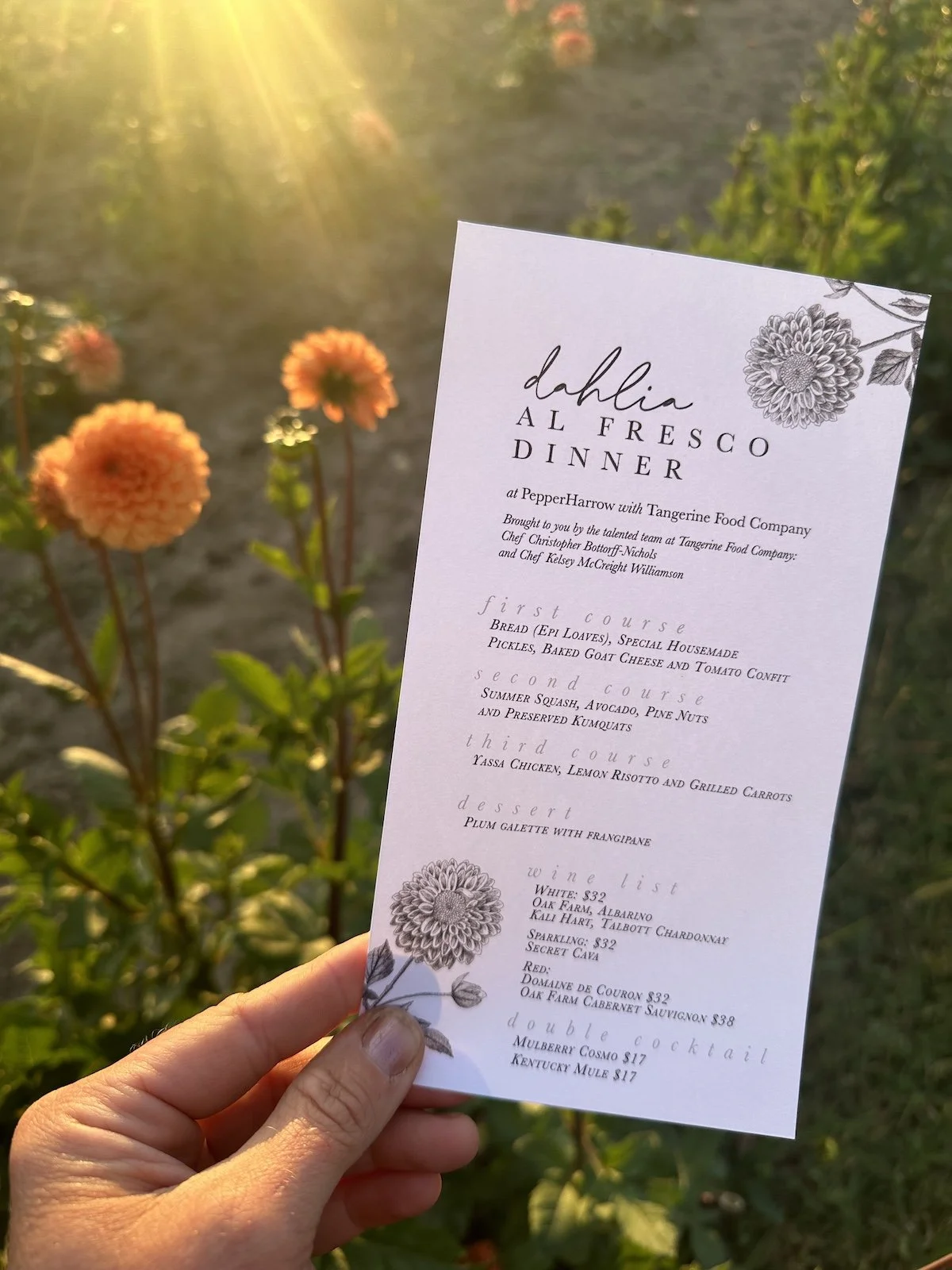
Here’s a peek at the expertly crafted menu you can expect from Tangerine Food Company:
1st Course - Antipasto
Bread - Pita/Pickles/Pork Rillette
2nd Course - Vegetable
BBQ Sweet Potatoes with Roasted Fennel, Onions, Tzatziki, Pecans and Fennel Fronds
3rd Course - Intermezzo
Lacto-Fermented Apple
4th Course- Entree
Braised Lamb Shoulder with Rice/Chickpea Pilaf and Pickled Onions
5th Course - Dessert
Parsnip spice cake with celery white chocolate ganache
What’s the Al Fresco Dinner Like?
This dinner is served picnic style which allows you to pick up your dinner and choose a table set with white linens among the flower fields. Dine next to our favorite dahlias, the lavender fields, or other beautiful views while you enjoy your meal. Mingle with other guests, roam the flower fields after dinner, and be sure to savor and take in this stunning evening set apart for you.
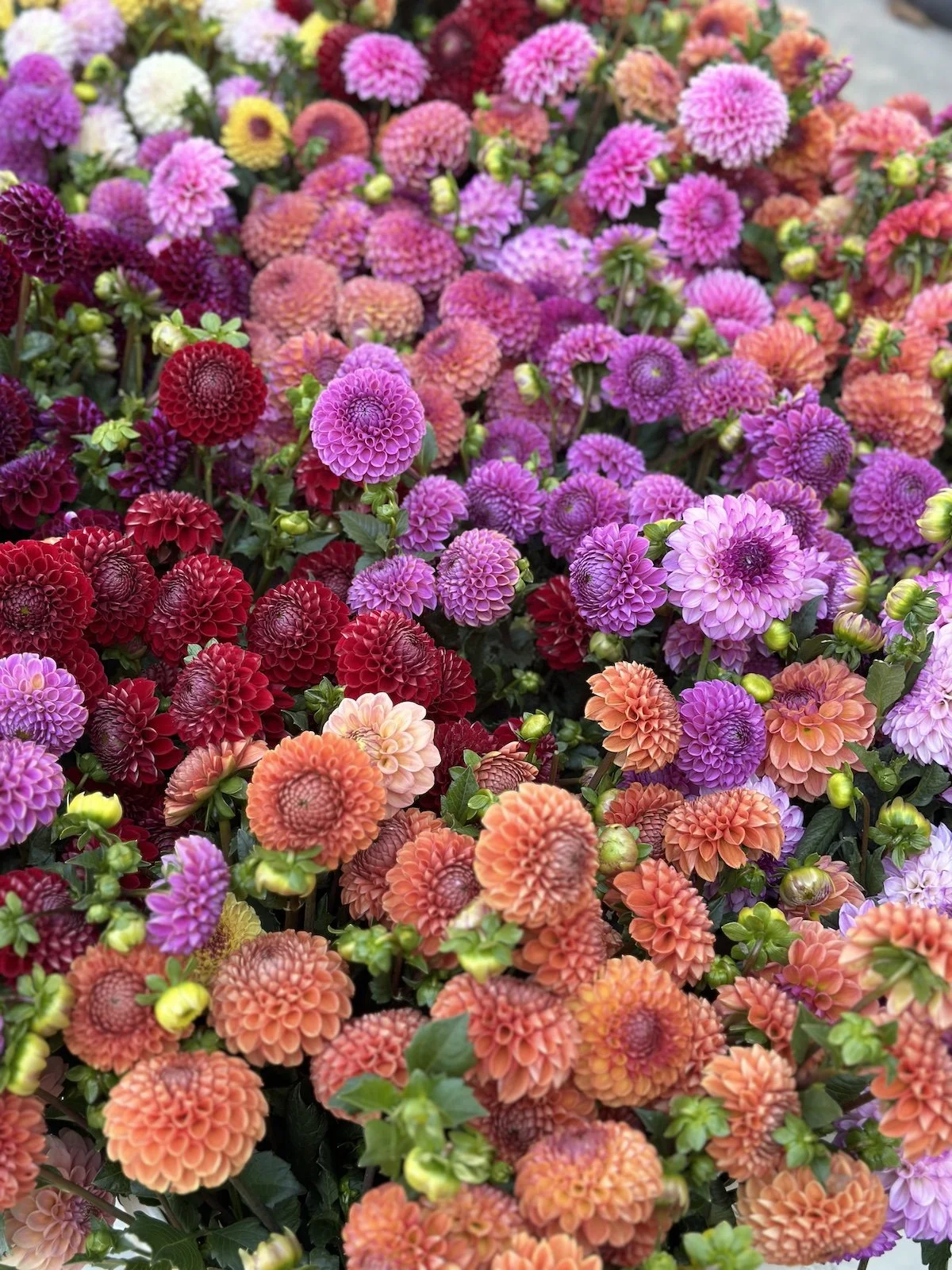
Dahlias for Days
When you arrive at PepperHarrow for the Dahlia Al Fresco Dinner, the first thing you’ll notice are the signs guiding you to parking. From there, a short walk brings you to our greeting station, where our team will welcome you and get you checked in for the evening.
Once you’re checked in, you can decide how you’d like to begin. Some guests like to head straight to the white barn to pick up their drinks and meals, while others prefer to first claim a favorite table among the flowers before making their way to the barn. Either way works—this evening is yours to enjoy at your own pace.
The charming white barn is where you’ll gather your carefully prepared beverages and delicious meal, after which you can find a cozy spot at the table of your choice. Take your time to relax, breathe deeply in the warm, late summer air, and fully absorb the stunning view of the dahlia fields glowing softly in the golden sunlight.
The remainder of the evening invites you to slow down, savor each bite of your meal, and allow the natural beauty of the farm to create a peaceful and memorable atmosphere.
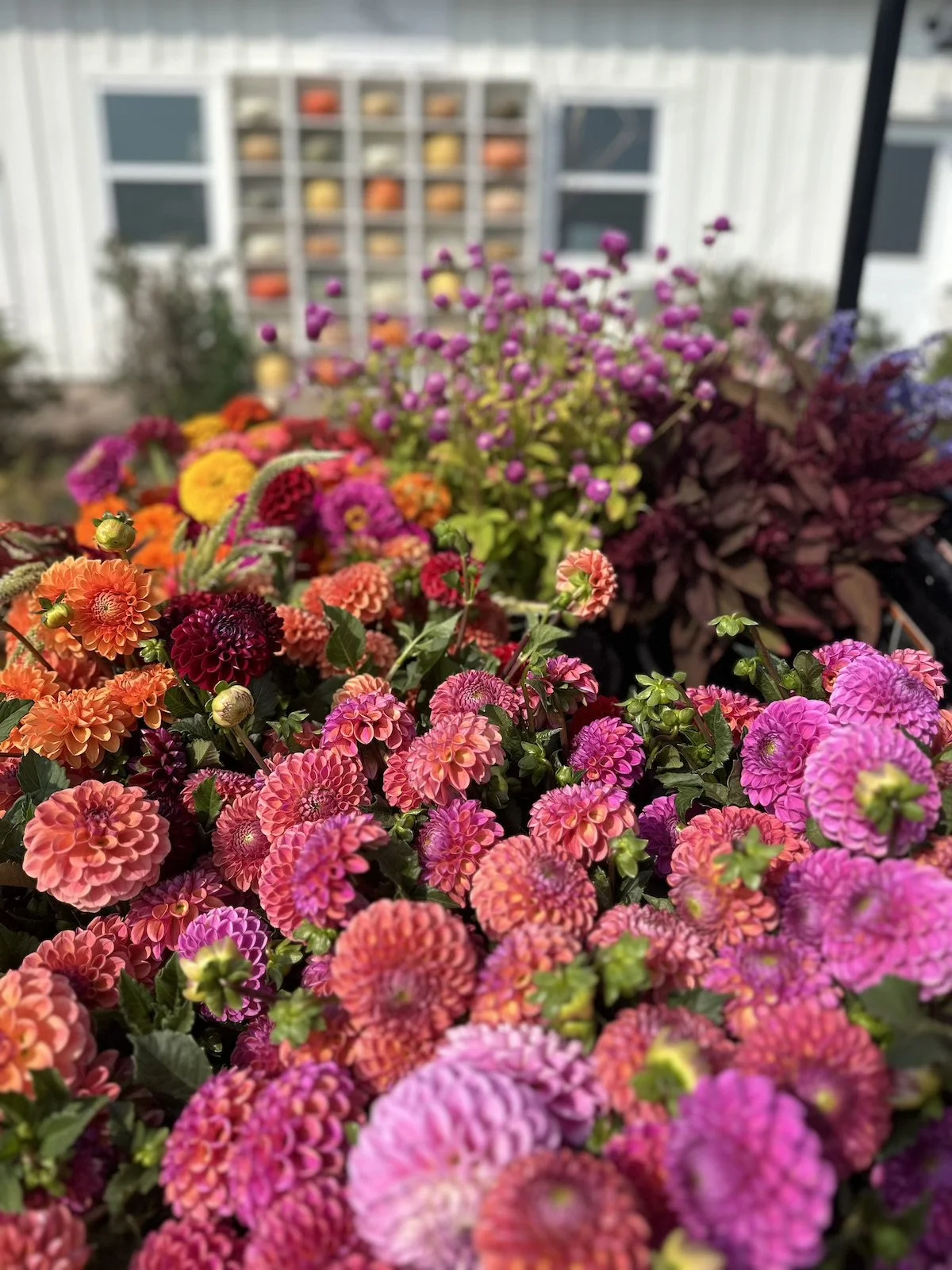
Photo Opportunities
Throughout the flower farm, there are beautiful photo backdrops and plenty of opportunities to capture those dreamy sunset moments. Be sure not to miss your chance to take some unforgettable photos.
We hope this peaceful evening provides you with a meaningful opportunity to slow down, truly be present, and fully connect with the serene beauty of nature around you. It is often easy to become caught up in the busyness of everyday life, but it remains so important to stay grounded and rooted in what genuinely matters most.
Tickets are still available, but they won’t stick around forever. You can find them here, or check out any of our other fall classes and events. We can’t wait to connect and welcome you to the farm!
XX Jenn and Adam
How to Build a Stunning Bouquet
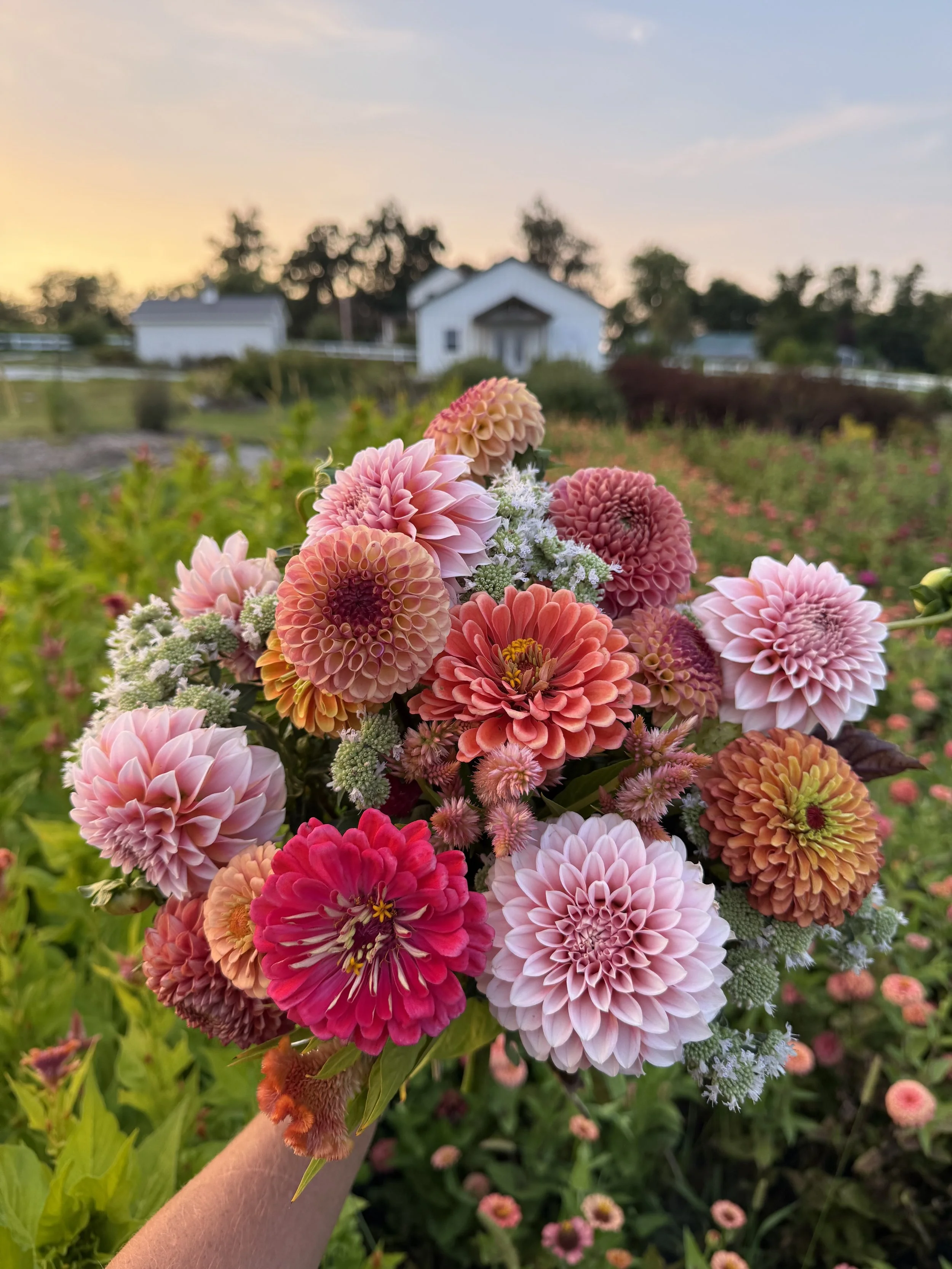
Whether you’re crafting a bouquet for a loved one, experimenting with your creativity, or just want to add a pop of color and beauty to your space, making a floral arrangement is a rewarding and relatively simple process. At PepperHarrow Farm, we make everything from farmers market bouquets and mason jar bouquets to stunning bridal bouquets. No matter what kind of arrangement you’re making, here’s our simple recipe for how to build something magical.
Step 1 - Gather Your Tools and Materials
Every great project starts with a little prep. Here’s a short list of everything you’ll need to make your bouquet:
A vase, glass jar, or just plain kraft paper. We like to make our bouquets a little differently depending on the kind, so choose what suits your style and vision best.
Fresh flowers (at least 3-4 different kinds)
Greenery (some variety is helpful)
Ribbon for decoration

Step 2: Start with Greenery
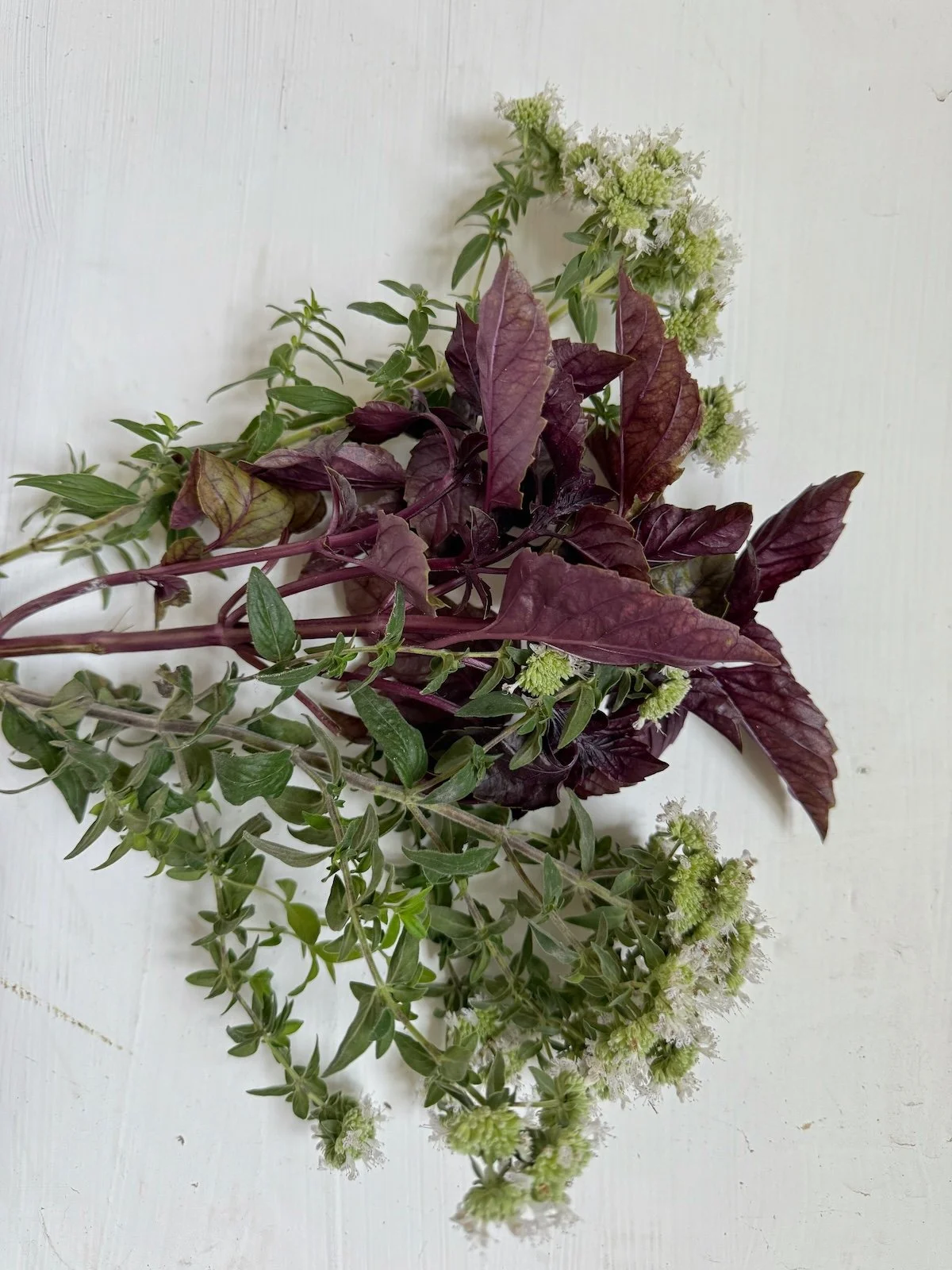
Start by adding around 3 pieces of greenery to your jar or vase. These pieces will give your bouquet structure, as well as shape and volume, and you can use them to build around. When choosing greenery pieces for a bouquet, a few great options include mint, basil, eucalyptus, or mountain mint, as we show here.
Step 3 - Choose a Color Palette
If you’re stuck on where to start, or if you have a ton of flower variety, you can simplify your choices by deciding on a color palette. While certainly not necessary, a color palette does help bring a cohesive look to any bouquet. Decide on a palette that suits the occasion or your personal taste but try to stick to 2-4 colors.
Step 4: Add Focal Flowers
These flowers will be the star of your bouquet and give you a point of reference to build the rest of your bouquet around. Choose 3-5 eye catching and typically larger, circular flowers like roses, peonies, sunflowers, zinnias, or dahlias.

Step 5: Add Filler Flowers
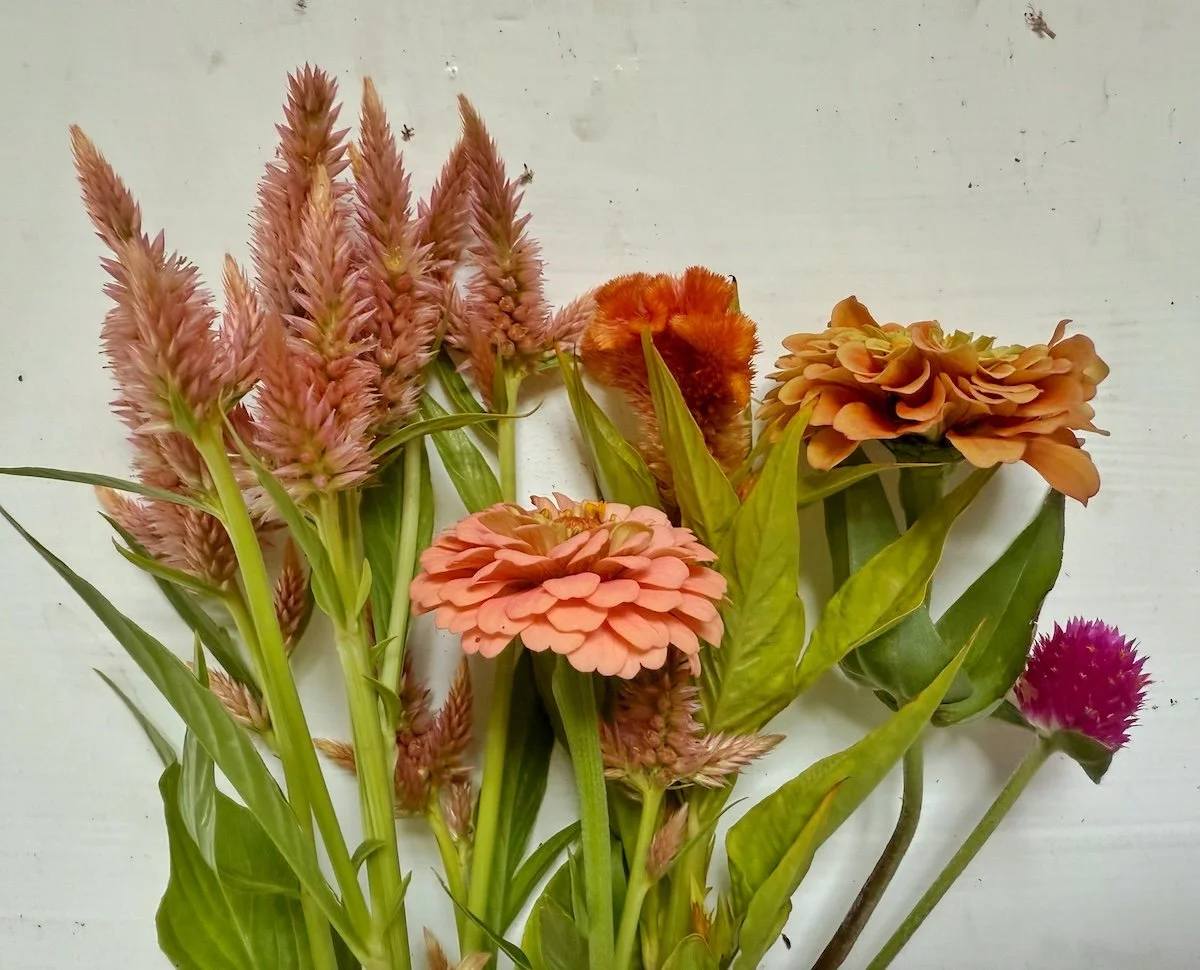
There’s no magic number of flowers to use here, just start filling out the rest of your bouquet with pieces that support and compliment your focal blooms. These should vary in size and texture but harmonize in color and mood. We love to use conical shapes like celosia and snapdragon as one textural piece, but other great options include statice, stock, carnations, ageratum, salvia, or smaller zinnias and gomphrena, as we show here.
Step 6: Add a Couple Sparkles
No bouquet is complete without a couple of sparkles (or what Adam likes to call dinkles lol). These are light, airy bits that add a final bit of texture. You only need a couple to catch the eye, but they really bring everything together. Try using flowers like giant swamp milkweed, ammi, baby’s breath, queen anne’s lace, or our favorite, cosmos!

Final Thoughts, Tips + Tricks for Bouquet Making
Cut your stems at an angle to allow for better water absorption.
Make sure to check your water 24 hours after making your bouquet. Flowers drink deeply the first several hours after being cut.
If you’re making a bouquet without a jar or vase, wrap the stems tightly with a rubber band, tape, or finish with a bow depending on your design.
If placing your arrangement in a vase, trim stem heights to suit the container, roughly 1.5 times the height of the vase or jar you’re using, and remove any leaves below the waterline to prevent rot and to extend the vase life of your flowers.
Creating a stunning bouquet is all about layering and getting creative from one step to the next. If you want more pointers, check out our online classes like How To Make A Wrapped Jar Arrangement or Centerpiece Design and let us know what kinds of bouquets you create! Happy bouquet making!
XX Jenn and Adam
10 Ways to Use Lavender This Season
Lavender is a powerful and versatile flower that doesn’t just look and smell amazing but can be used in a variety of different ways. Our lavender is in full bloom right now, so we’d love to share some of our favorite ways to make the most of this beautiful plant. Whether you use it for wellness or culinary purposes, or just around your home, here are 10 ways you can use lavender this summer.

1. Lavender Lemonade or Iced Tea
Lavender lemonade might just be one of our favorite summer creations, because it’s so refreshing and lovely after a long day. Lavender is perfect for pairing with summer drinks, and if you need some inspiration, check out our recipe here.
Iced teas are a close second when it comes to summer drinks. We recommend adding lavender simple syrup to your favorite blend, or try one of our homemade tea blends Lavender Fields or London Fog.
2. Baking
Not only does lavender go great in drinks, but it also makes for delicious summer treats. Culinary lavender pairs beautifully with citrus, berries, and vanilla so try it in any of your favorite recipes or in something new! Here are a few ideas to get you started:
Lavender Lemon Shortbread Cookies
Blueberry Lavender Muffins
Lavender Lemon Pound Cake
Lavender Peach Crisp
Honey Lavender Cupcakes

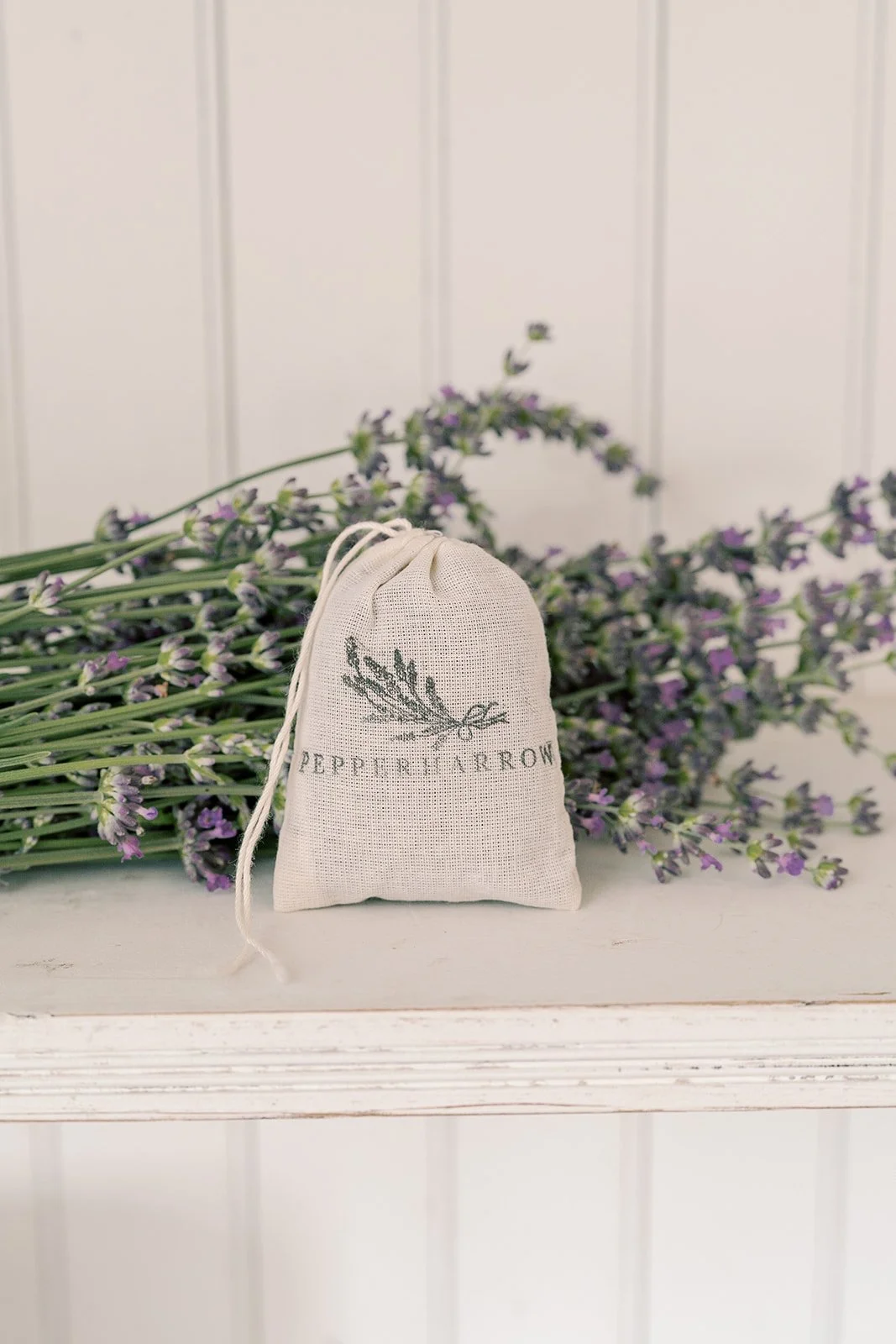
3. Lavender Sachets
Sachets are small fabric pouches filled with dried lavender buds, and they have so many uses! Here are some of our favorite ways to use them:
As a car air freshener
In a nightstand or clothing drawer for a fresh smell
Under a pillow to promote good sleep
4. Lavender Honey
While honey is delicious on its own, infused lavender honey is perfect for a special treat in teas, on toast, or in dessert. If you want to try your hand at making your own, here’s a quick and simple recipe:
Add 1-2 tablespoons of dried culinary lavender to one cup of local honey.
Seal in a jar and let infuse for 1-2 weeks.
Strain and use as desired.
5. Lavender Body Oil
Lavender Bath & Body Oil is a lovely way to unwind, relax, and implement into your daily self-care routine. Either add a few drops to your bathwater for a calming soak or apply it directly to your skin after showering or after spending time in the sun. It will leave your skin feeling hydrated and with lavender’s calming properties, it will help relieve stress and promote relaxation.

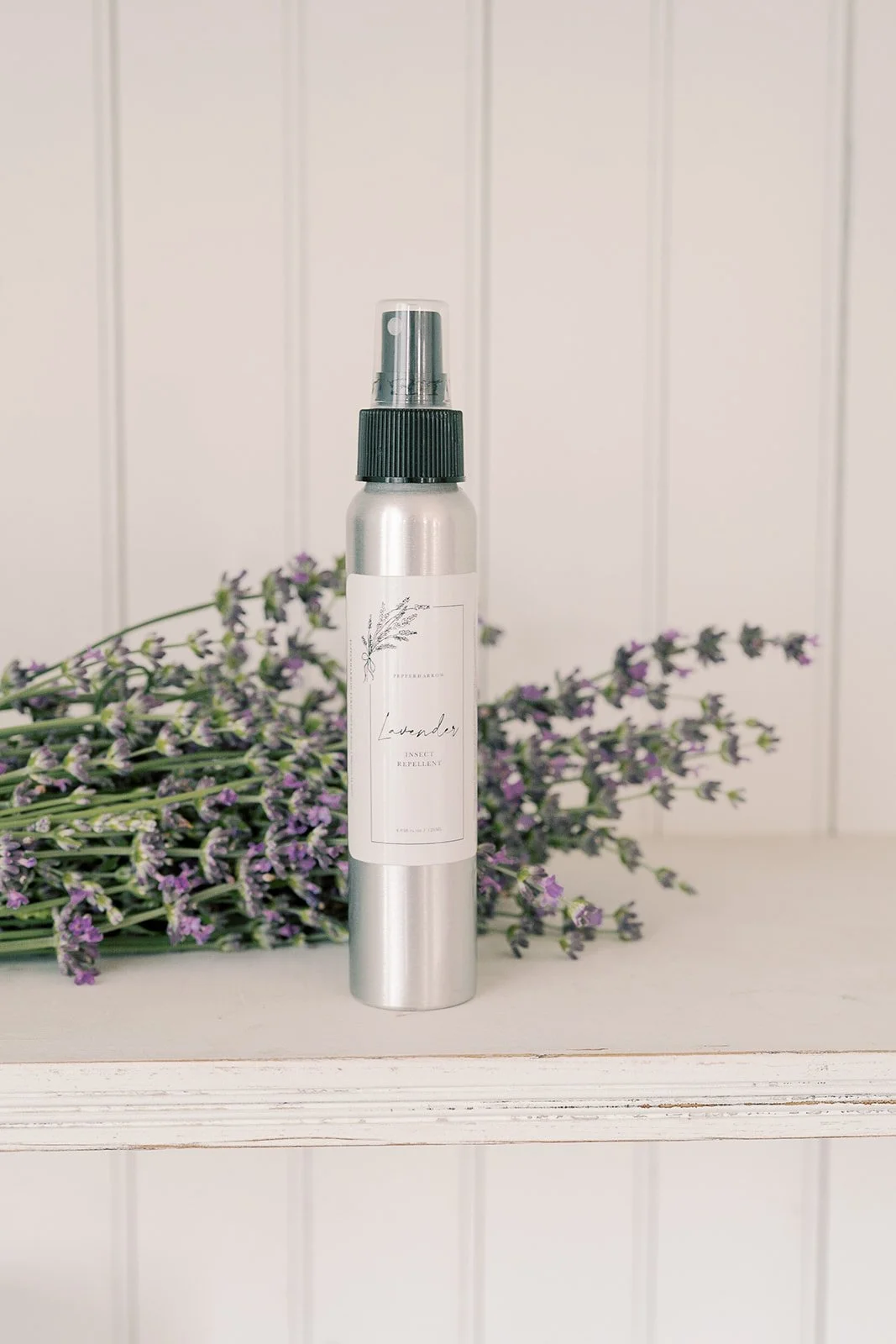
6. Lavender Insect Repellent
We all know how bad the bugs can be this time of year, so lavender insect repellent is a must-have. Made with lavender essential oil, lavender works as a natural repellent that’s non-toxic and safe for both you and the environment. Plus, it smells amazing!
7. Lavender in Floral Arrangements
Lavender is a stunning flower in summer floral arrangements. Use fresh lavender stems as stand-alone pieces in bouquets or mix them with wildflowers or other cut flowers. If you want to learn more about making your own floral centerpieces, check out our personal pointers!
Alternatively, tie lavender bundles with twine and hang them upside down to dry for long-lasting beauty.
8. Lavender Ice Cubes
To pair nicely with fun summer drinks, try adding culinary lavender to large ice cubes. Place one or two small buds of culinary grade lavender in each section of an ice cube tray. Fill with water and freeze, and use in lemon water, cocktails, or iced teas and lemonades.

9. Lavender Bath Salts
A bath soak can be another great way to relax and unwind after a summer day or makes for a perfect gift. It’s easy to make at home and can be made with a variety of essential oils, like our Lavender & Eucalyptus.
10. Lavender-Infused Vinegar Cleaner
Whether you’re cleaning up after a summer garden party or deep cleaning before back-to-school season, lavender cleaner is a great way to tidy up and will leave your space smelling amazing. Try making your own with this recipe:
Fill a jar with white vinegar and add a handful of dried lavender.
Let infuse for 1-2 weeks.
Strain and pour into a spray bottle (dilute 1:1 with water for a surface cleaner).
If you want to learn more about growing, harvesting, and managing your own lavender, consider taking our Online Lavender Growers Masterclass. We walk you through the process from start to finish and provide you with our best tips and tricks for growing lavender in the Midwest. We hope you try some of these products and recipes and can’t wait to see what you use lavender to create this summer. Happy growing!
XX Jenn and Adam
