
Gathering Seeds From The Garden
As the fields at PepperHarrow begin to slow down, after another wild growing season, we find ourselves in one of our most favorite times of the year, doing a little seed gathering. It’s such a peaceful, reflective time when we walk the rows of flowers that just months ago were bursting with color, and now, they’re slowing down quite a bit, but they still hold the promise of what’s to come.
The Beauty of Saving Seeds
There’s something deeply satisfying about collecting seeds from plants we’ve nurtured from tiny starts into full bloom. Each seed carries the memory of this year’s sunshine, rain, and care. It’s a living story that continues into the next season. For us, it’s not just practical, it’s a way to preserve the unique beauty of PepperHarrow flowers to ensure more blooms for next year.
We especially love saving seeds from our heirloom flowers and experimental varieties, including some of our very own PepperHarrow-bred dahlias. It’s part science, part art, and a whole lot of patience. Each pod or seed head is a treasure waiting to be tucked away for next spring’s planting.
How to Gather Seeds from the Garden
Milkweed
Milkweed pods are like nature’s little gift boxes for pollinators, and monarchs in particular. Once the pods begin to turn brown and split open naturally, it’s time to collect. Wait until the silky floss inside is just beginning to release, then gently open the pod and pull out the seeds.
We like to grab the entire bunch of seeds together to contain the white floss. Knock as many seeds off as possible into a strainer, but typically the floss does start to get a little out of control, so when that starts to happen, to separate the floss-fluff, rub the floss around in your hands and work to dislodge as many seeds as possible. Catch the seeds that drop from this process, in the mesh screen. You may have to pick some seeds out of the white fluff if some get stuck.


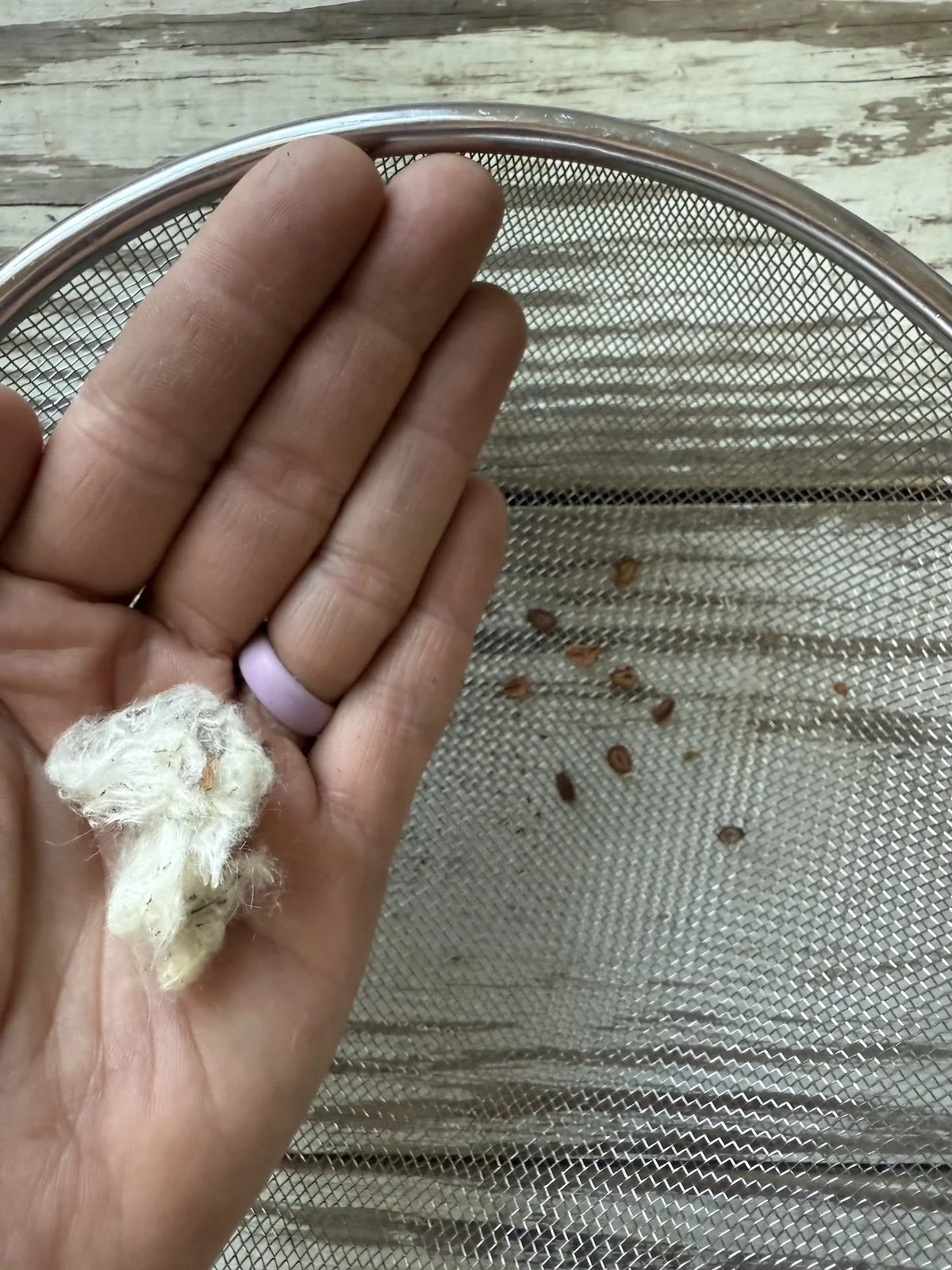

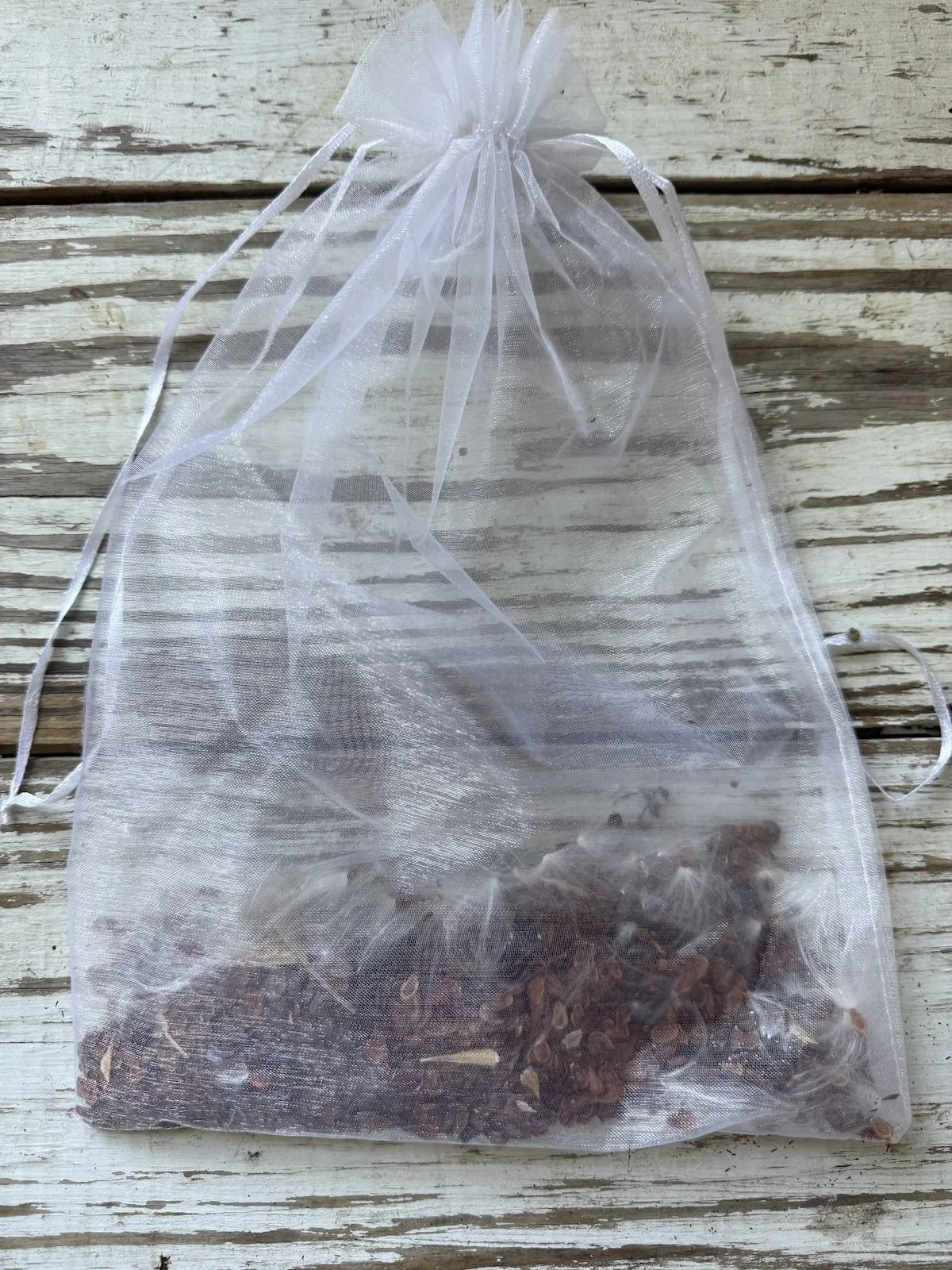
Once you’re done gathering all of your seeds, store them in an organza bag in a cool, dry place until early spring, February/March, in zone 5b.
Forget-Me-Nots
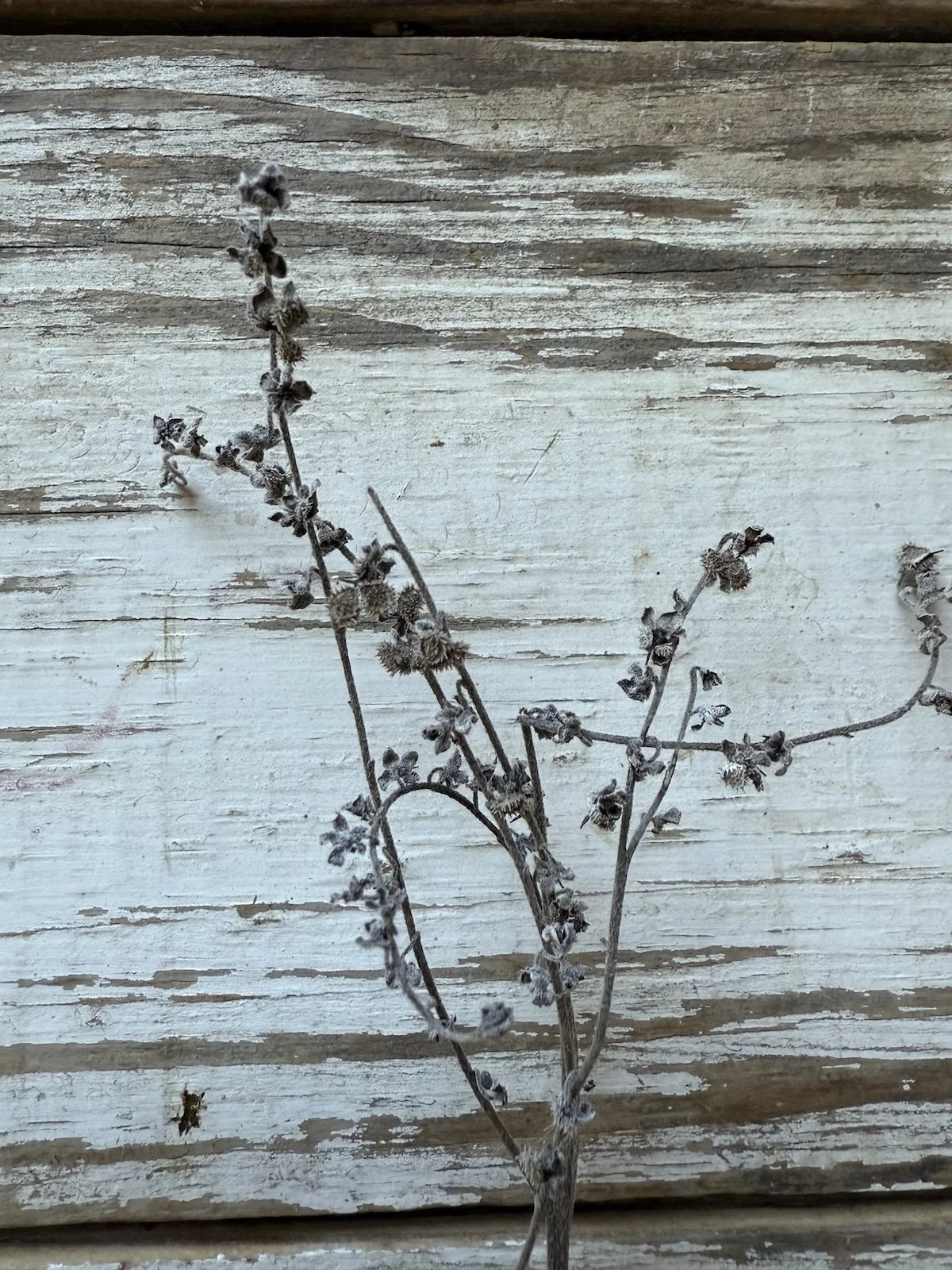
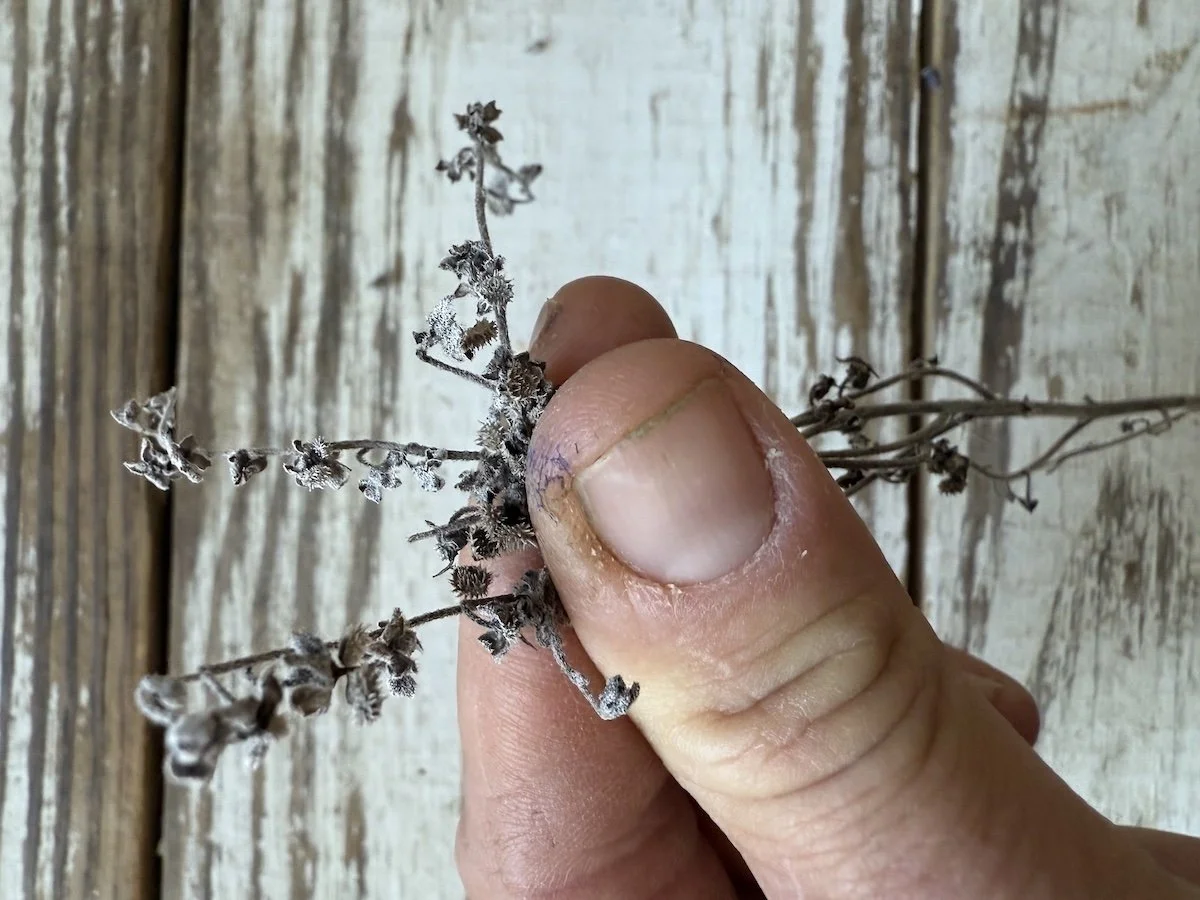
Tiny and delicate, forget-me-not seeds are best gathered once the flowers fade and the seed heads turn brown. Gently pull off the spent bloom pods, pulling the stem between your thumb and forefinger, over a bowl or paper plate to release and gather the small, spiky, brown seeds.
After all of your seeds are collected, store in an organza bag in a cool, dry place until spring.


Celosia
Gather celosia when the blooms are at their prime bloom time with vibrant color, no discoloration, but those that you can see are loaded up on the bottom of the bloom with lots of dark seeds.
We gather ours up into bunches of about 10-15 stems, rubberbanding the bottom. The stems are stored by laying in a paper box to line it, with the blooms resting inside. Keep in a very warm, dry place with good air flow from a running fan.

Collecting Celosia Seed
Celosia’s vibrant plumes eventually fade into papery seed heads filled with hundreds of tiny black seeds.
When the flower heads feel dry and brittle, shake or crush them gently over the box to get as much seed out as possible. Once all seeds have been collected, pour seeds into a bowl and sift out the chaff with a fine sieve or by blowing gently.
When the flower heads feel dry and brittle, shake or crush them gently over the box to get as much seed out as possible. Once all seeds have been collected, pour seeds into a bowl and sift out the chaff with a fine sieve or by blowing gently.
Celosia seeds can last for years if kept cool, dark, and dry, making them one of the easiest to save.

Dahlias
Dahlias are a bit more mysterious. Not every bloom will produce viable seed, but for the seeds that are viable, each one will grow into a completely unique flower. That’s part of the fun!
Allow the flower to stay on the plant until the seed head is brown and papery, or gather when they have a small amount of green and allow them to dry inside for a few days.
Split the head open to find small, flat, black seeds tucked inside. Spread them out to dry completely before storing in an organza bag.
These are the seeds that carry PepperHarrow’s future dahlia varieties, our ongoing experiment in color and form!

Dahlia Seed Pods
Dahlia seed pods usually look like this, similar to a gooseneck shape. Inside, there are usually black seeds that can be collected once they have a chance to dry out for a couple of days.

Label, Store, and Dream
We always recommend labeling each organza bag with the variety, date, and any notes about the plant’s growth or color. You can do that on the bag itself, or add a tag inside. When spring rolls around, those little notes become invaluable reminders of what worked beautifully, or what might need a little experimenting.
Seed gathering is, at its heart, an act of gratitude. Each time we hold a handful of seeds, we’re reminded of the cycles of nature, the endless renewal that keeps the farm alive year after year. It’s a reminder that even as one season ends, the next is already waiting quietly in our hands.
As we pack away our seeds, we can’t help but imagine the fields they’ll become. Rows and rows of vibrant blooms, buzzing with pollinators, shining during long summer days.
XX Jenn + Adam
